Four Silk Road cities, a desert light that turns brick to gold, and tiled domes photographed for a century that still stop you in your tracks. This Uzbekistan photo tour runs west to east, from walled Khiva through Bukhara and Samarkand to Tashkent, timed for the low light of late October.
Co-led as a Shuttermoon × Matkali crossover, it is designed not just for photographers. It suits couples with mixed interests: we do the bazaars, workshops and old cities together, cameras out but nobody behind a tripod. The morning and evening light is where photographers get their own programme.
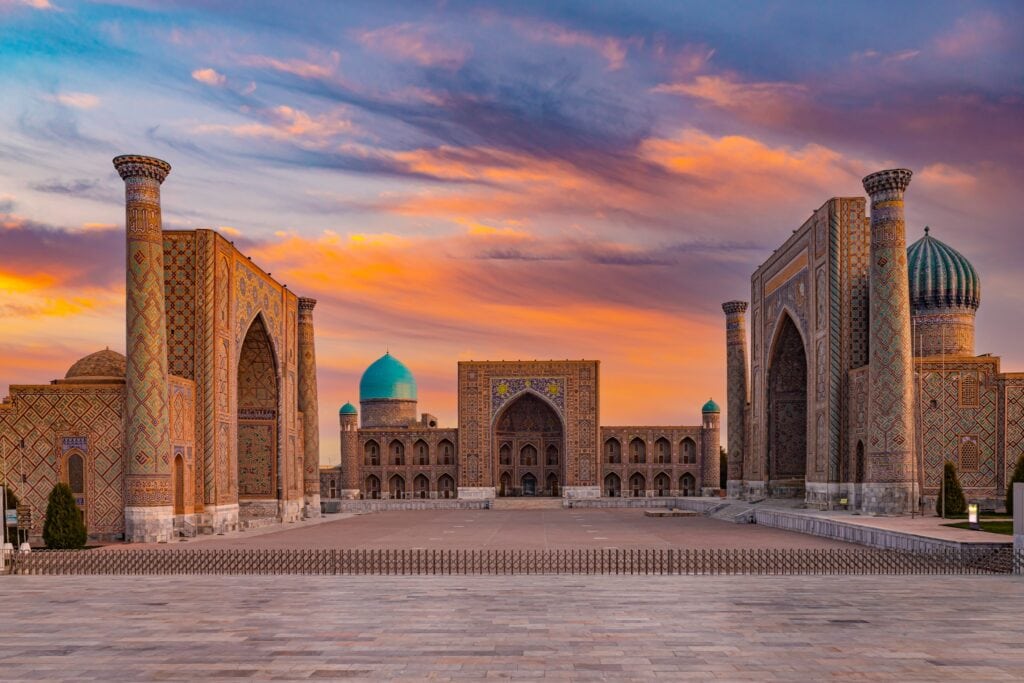
The route follows the old Silk Road from west to east. Khiva is the compact one, an ancient city small enough to learn by heart in two days, where you climb the ramparts before breakfast and watch the sun come up over a forest of minarets. Bukhara is the deep one, with the Kalyan minaret that Genghis Khan reportedly spared, trading domes where shafts of light fall through openings in the roof, and the reflecting pool at Lyabi-Hauz that goes glass-still in the early morning. Samarkand is the monumental one, all scale and colour, with Registan Square, the tiled corridor of Shah-i-Zinda and the gilded mausoleum of Gur-e-Amir. Tashkent closes the trip with a bazaar, a day in the mountains, an underground metro that is one of the most beautiful in the world, and a set of Soviet modernist buildings that joined the UNESCO World Heritage List in 2026.
Late October is a deliberate choice. Sunrise across the route falls between about 6:50 and 7:20 in the morning and sunset between about 5:20 and 6:05 in the evening, so the good light arrives at civilised hours and the days are warm without the summer glare. We travel and explore together through the day. The main shooting windows are in the evening, golden hour into blue hour, with a handful of sunrises where the location genuinely earns the early start: the walls of Khiva, the Kalyan minaret, Chor Minor, Shah-i-Zinda and an empty Registan. Daytime is for candid travel photography woven into the visits rather than for standing behind a tripod.
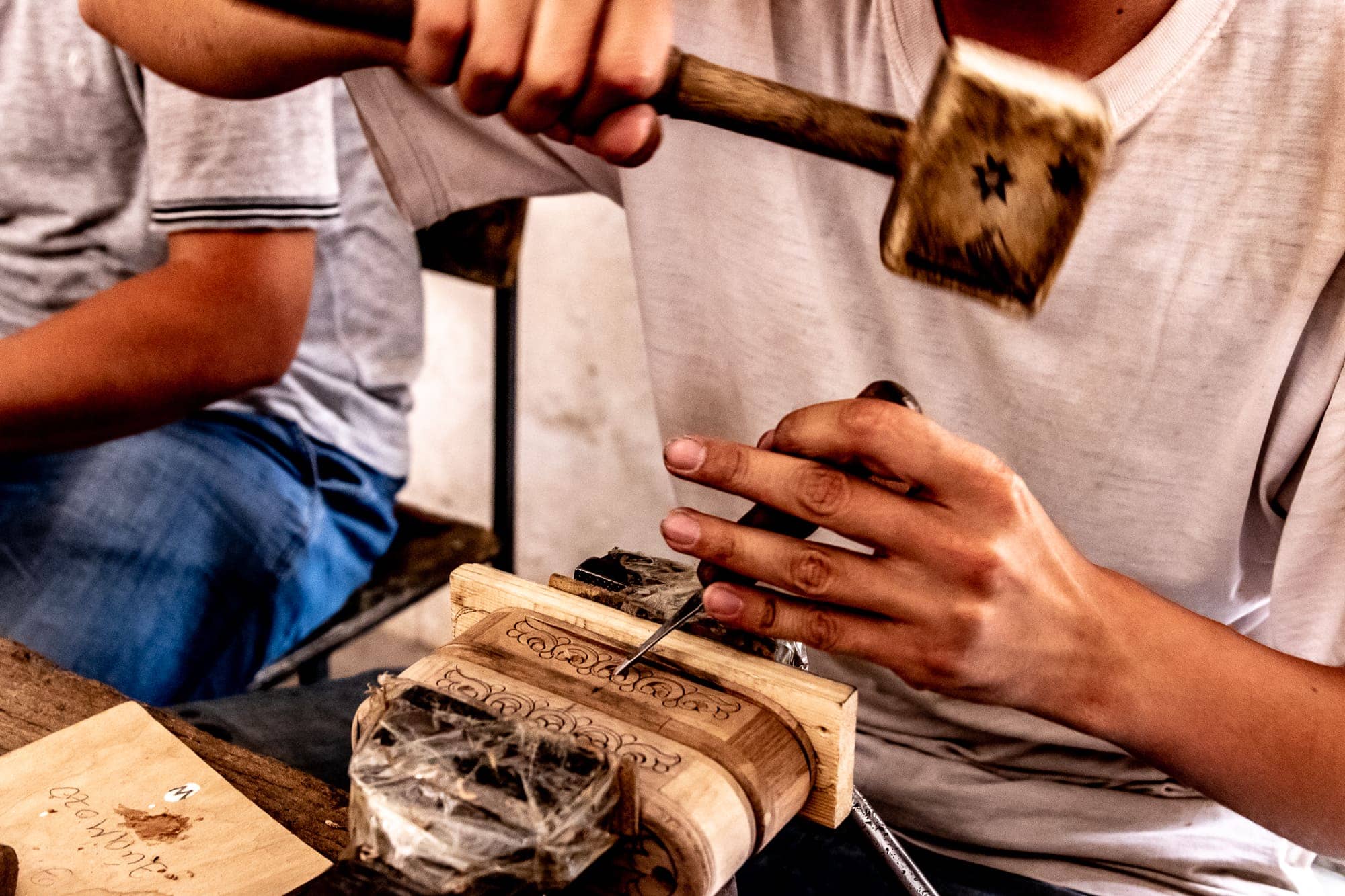
The tour is co-led. Jan handles the photography, the on-location instructions and the Lightroom sessions. Petr, who has led expeditions in Uzbekistan since 2021, handles the ground: the drivers, the ceramic and carpet workshops in Gijduvan, the silk paper mill in the countryside outside Samarkand, and the terraces worth walking to at the right hour.
The day programme is shared. Architecture, bazaars, workshops, a mountain day and tea houses are done by everyone, with cameras along for candid work rather than tripods, and during the evening shoots there is always somewhere good to sit for anyone not photographing.
Most days follow the same shape. On the five mornings with a sunrise shoot, and none of them is compulsory, we are out for the blue hour before the sun is up, work through into the first light, and come back for breakfast, after which there is a pause before the day proper starts.
The middle of the day belongs to the country itself: an old city, a bazaar, a workshop, a long lunch. A day spent following a raised umbrella is not what any of us came for, so much of it is walked at our own pace. Cameras come along, but nobody is standing behind a tripod.
The photography sharpens in the late afternoon. We regroup an hour or so before sunset, take up position, and work golden hour into blue hour, which in late October runs about 25 to 30 minutes past sunset. Dinner follows, late enough that nobody has to choose between eating and light.
For a pair where one person shoots and the other does not, the split is simple. You spend the day together. During the evening window the photographer works, and the other can take a tea house or a terrace, come along and watch, or go back to the room and put their feet up. Hotels are chosen partly for this.
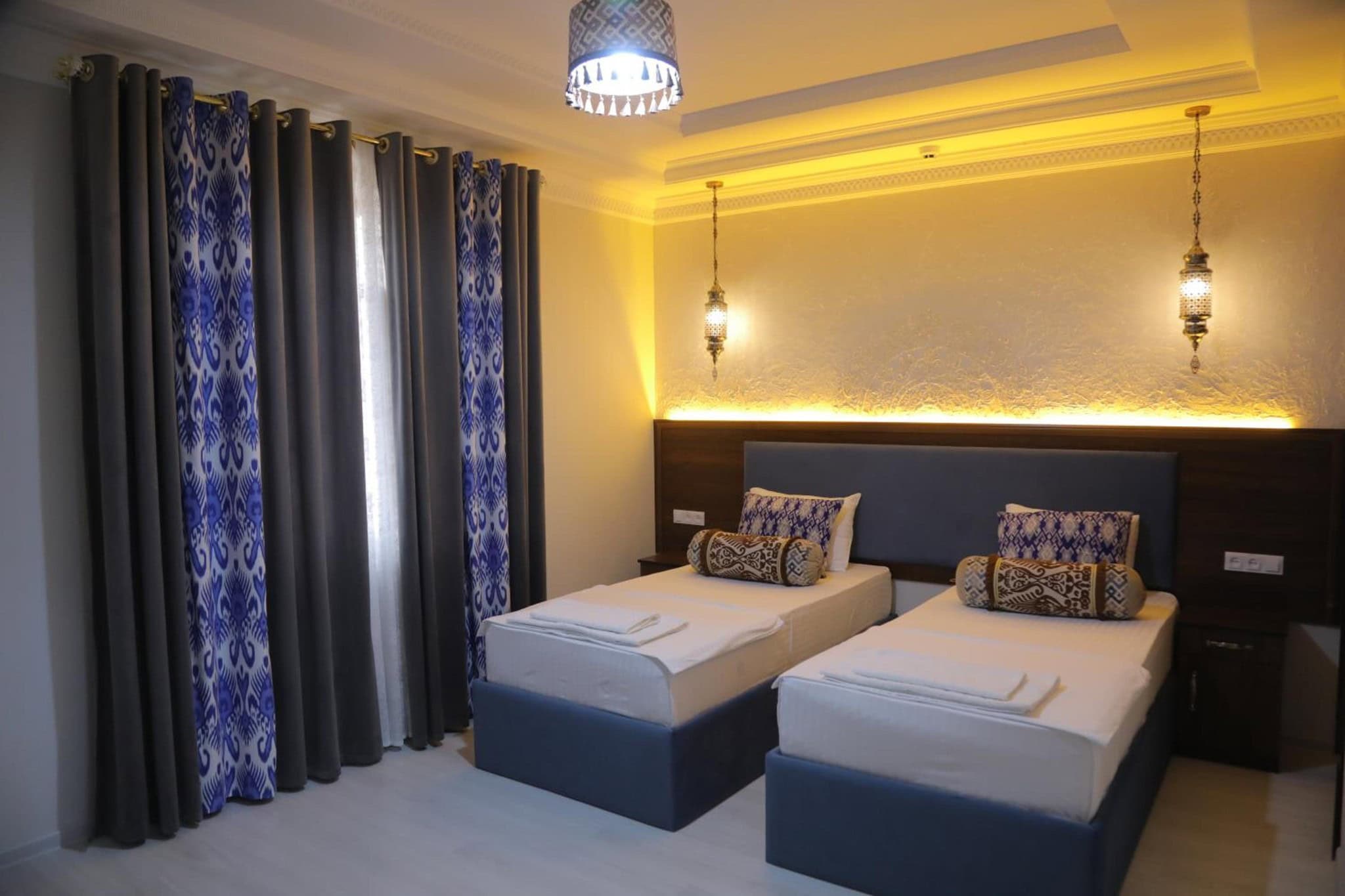
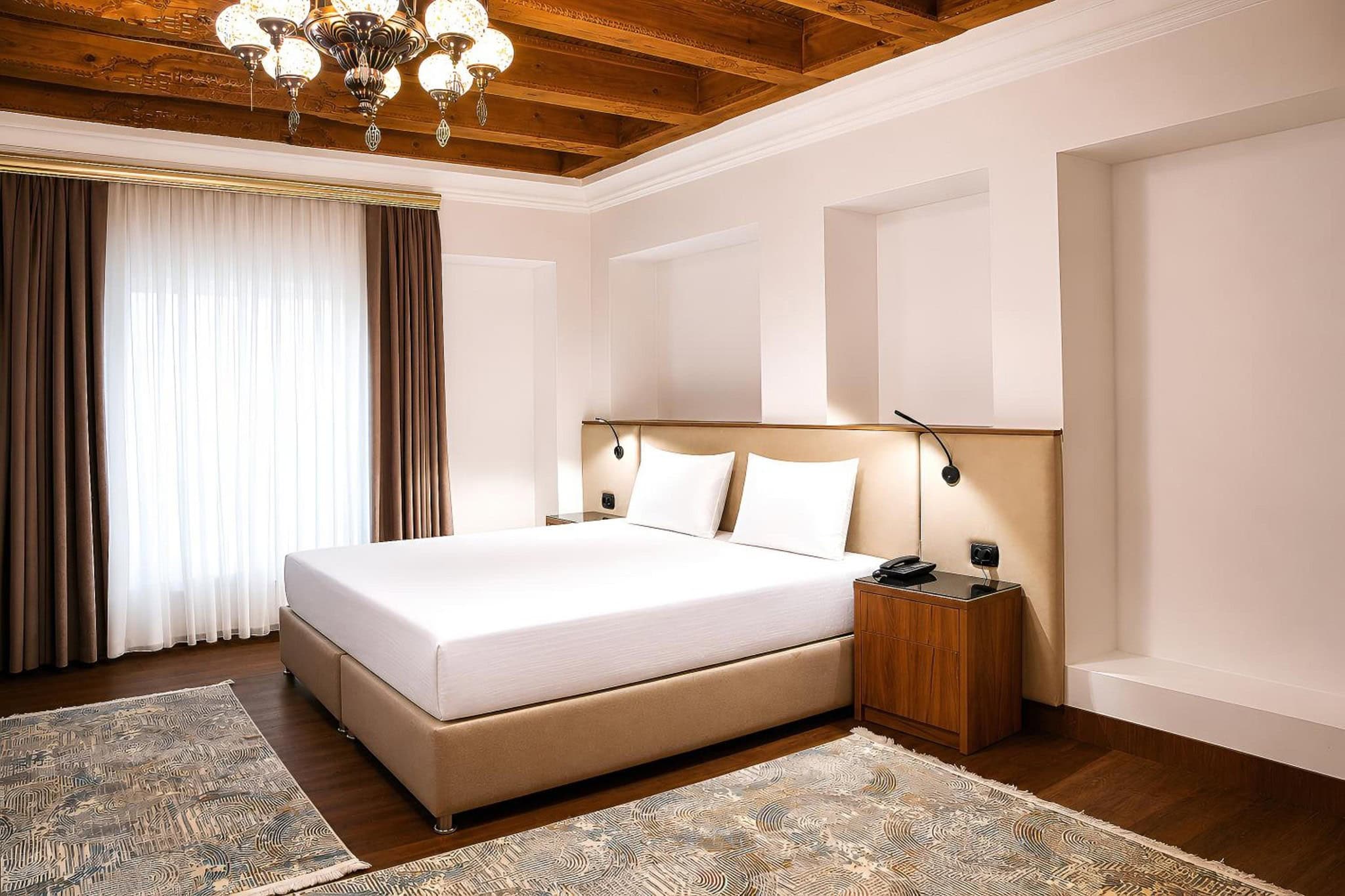
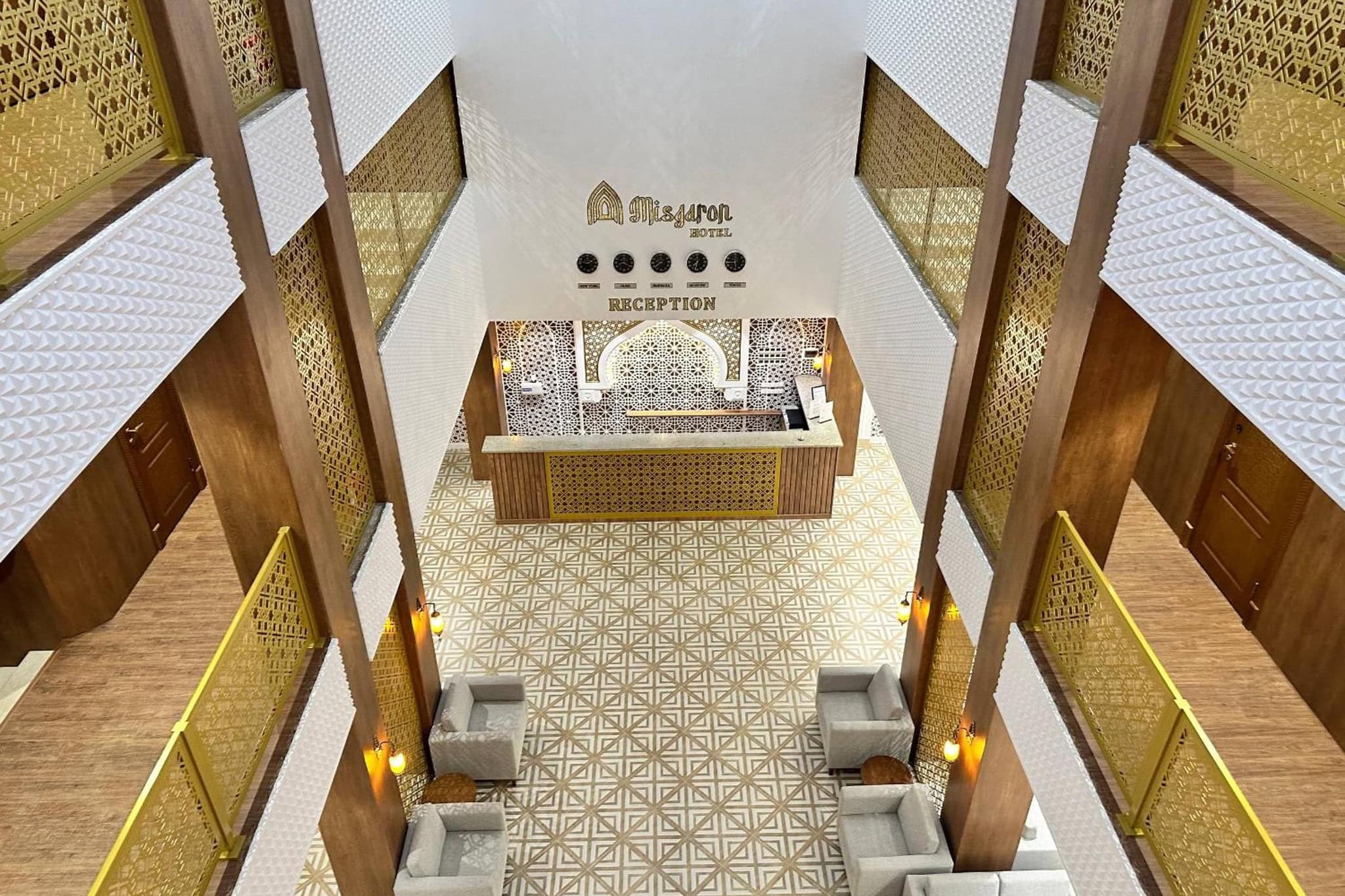
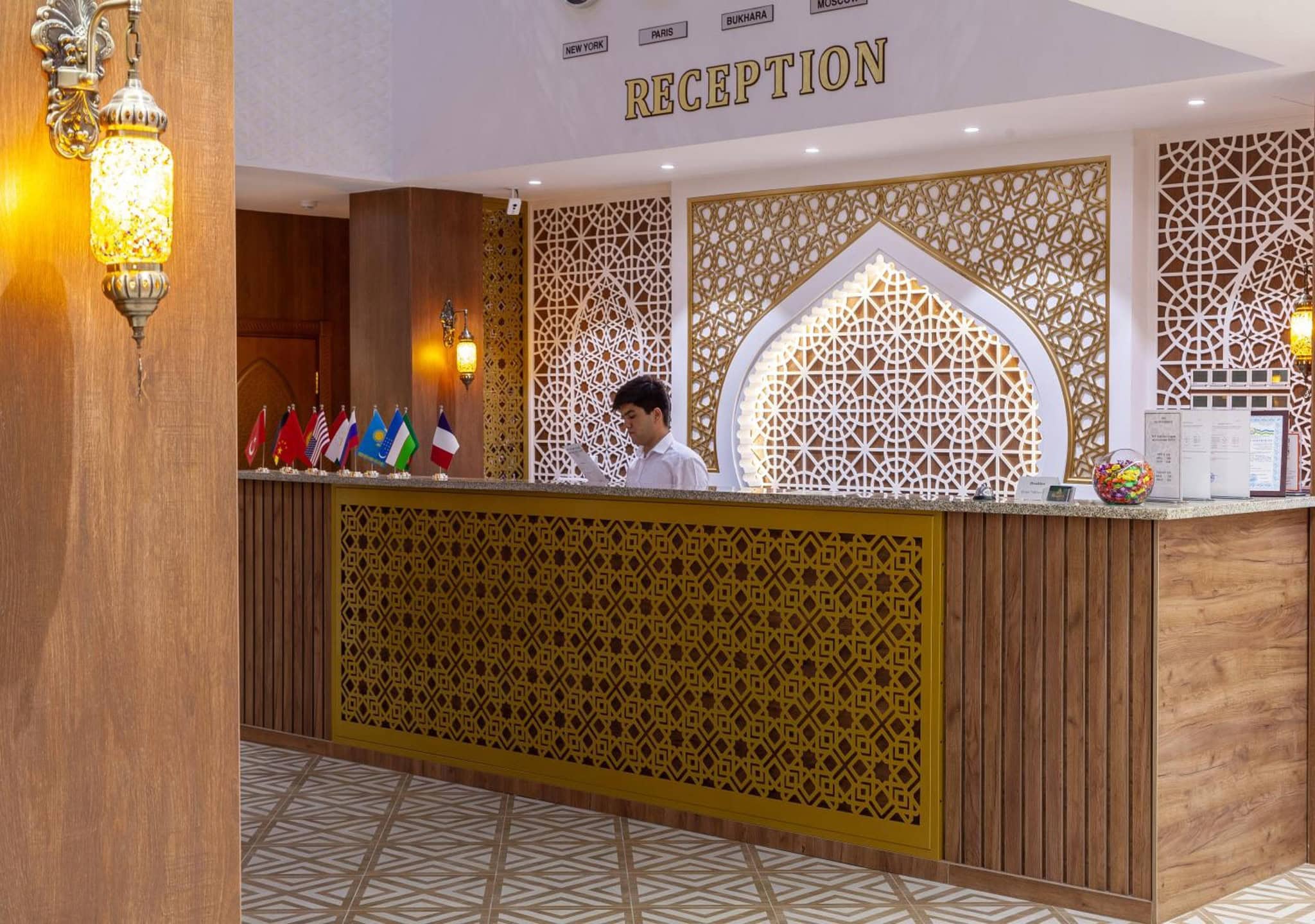
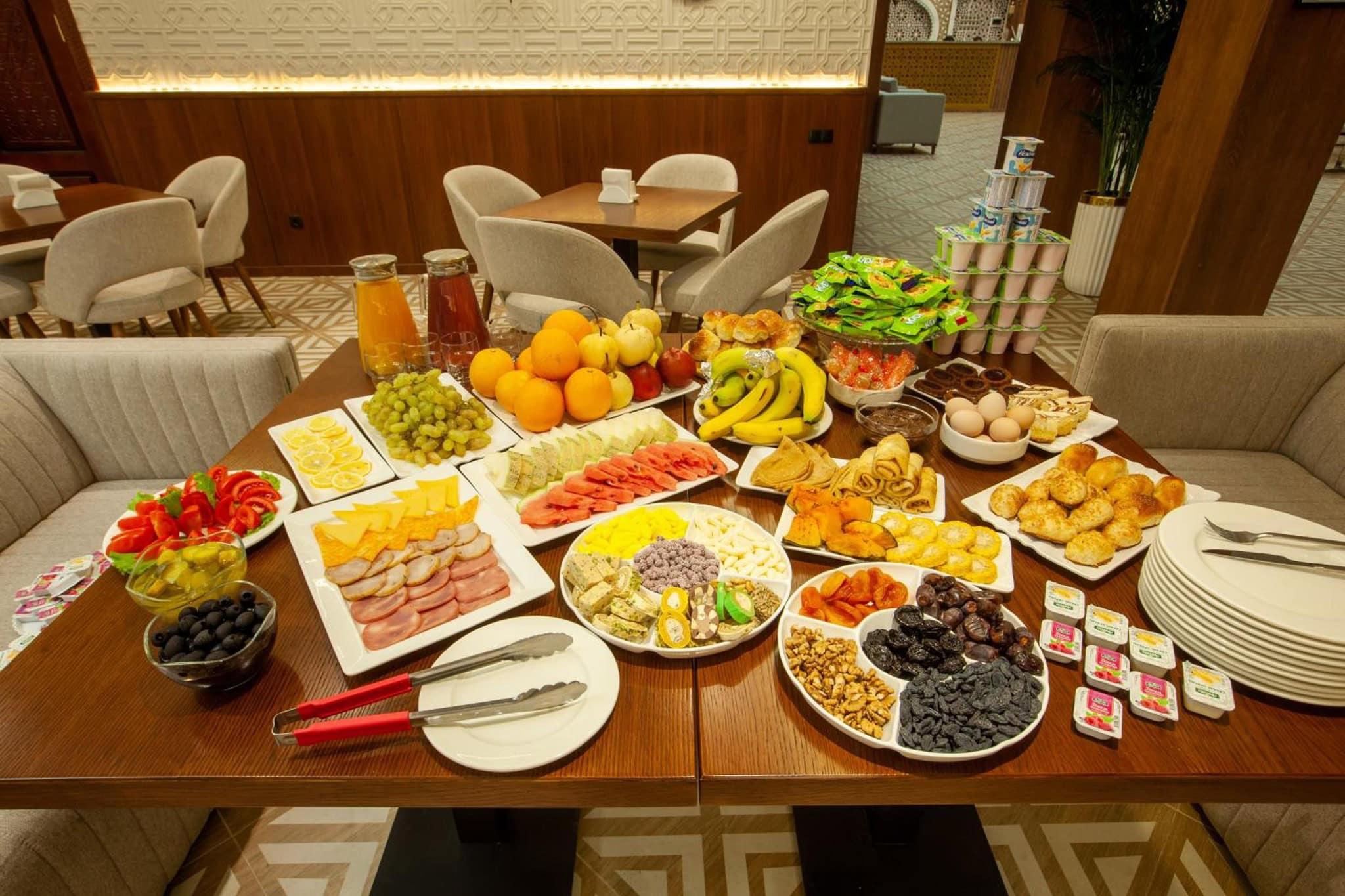
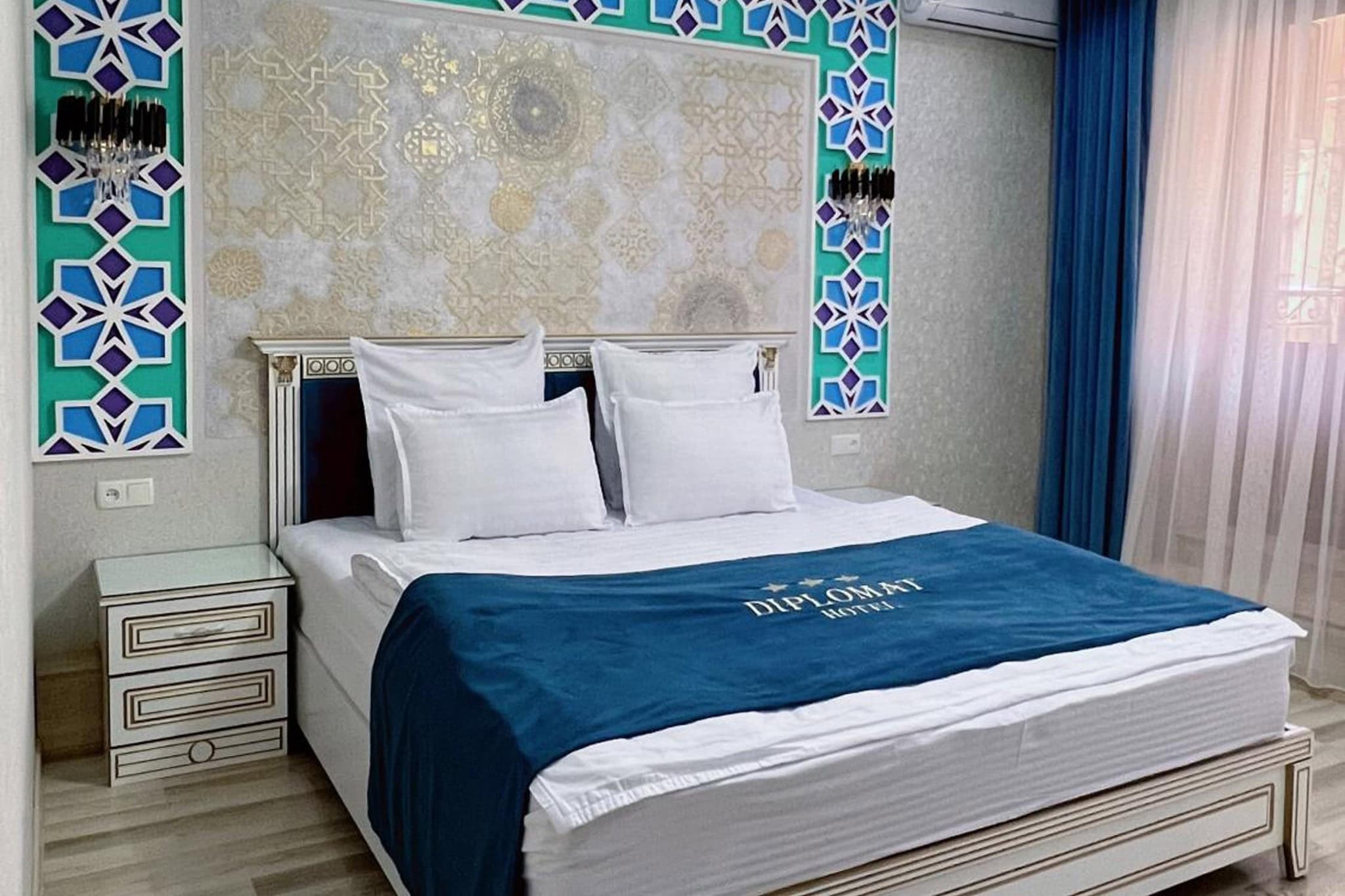
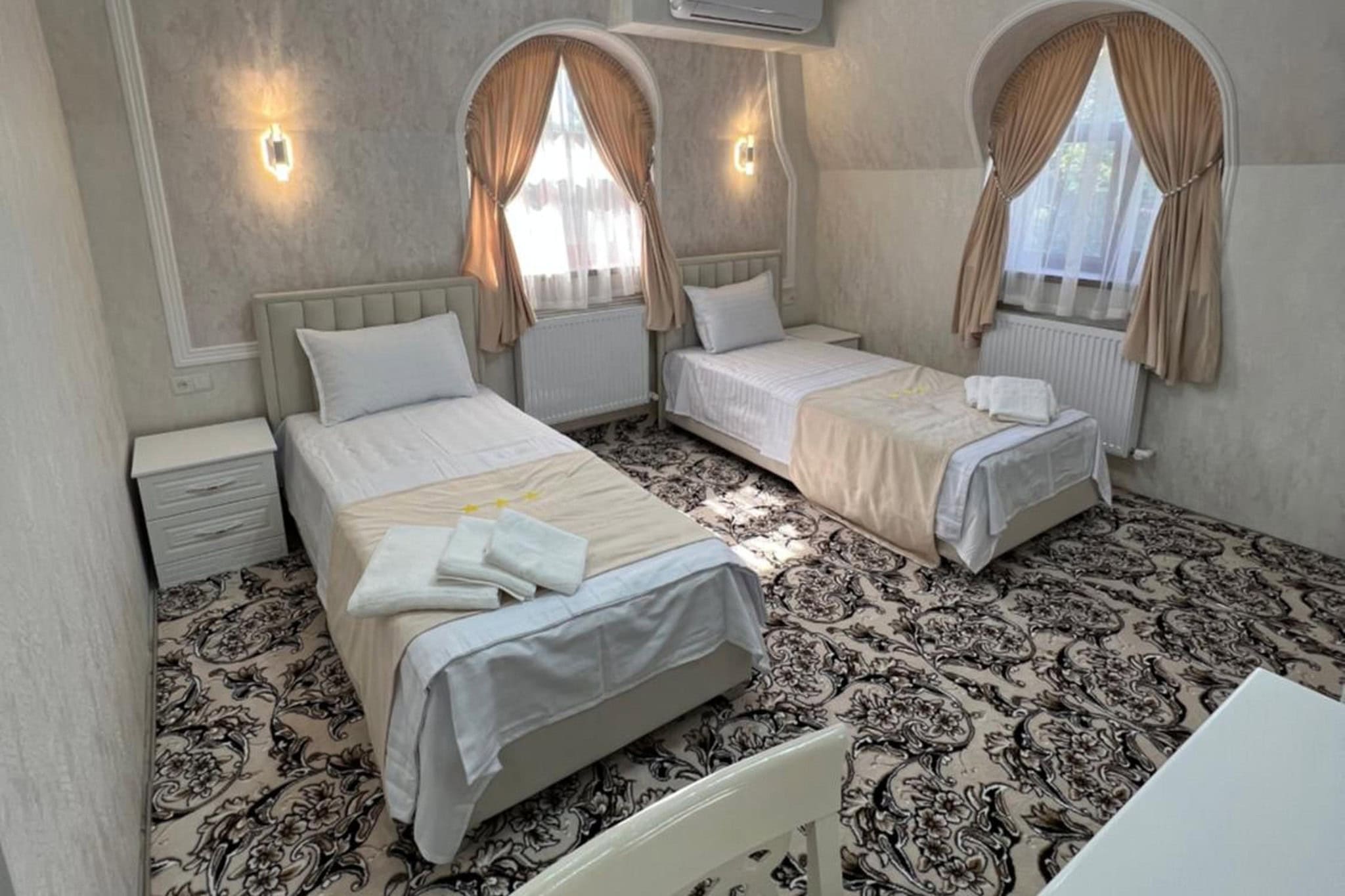
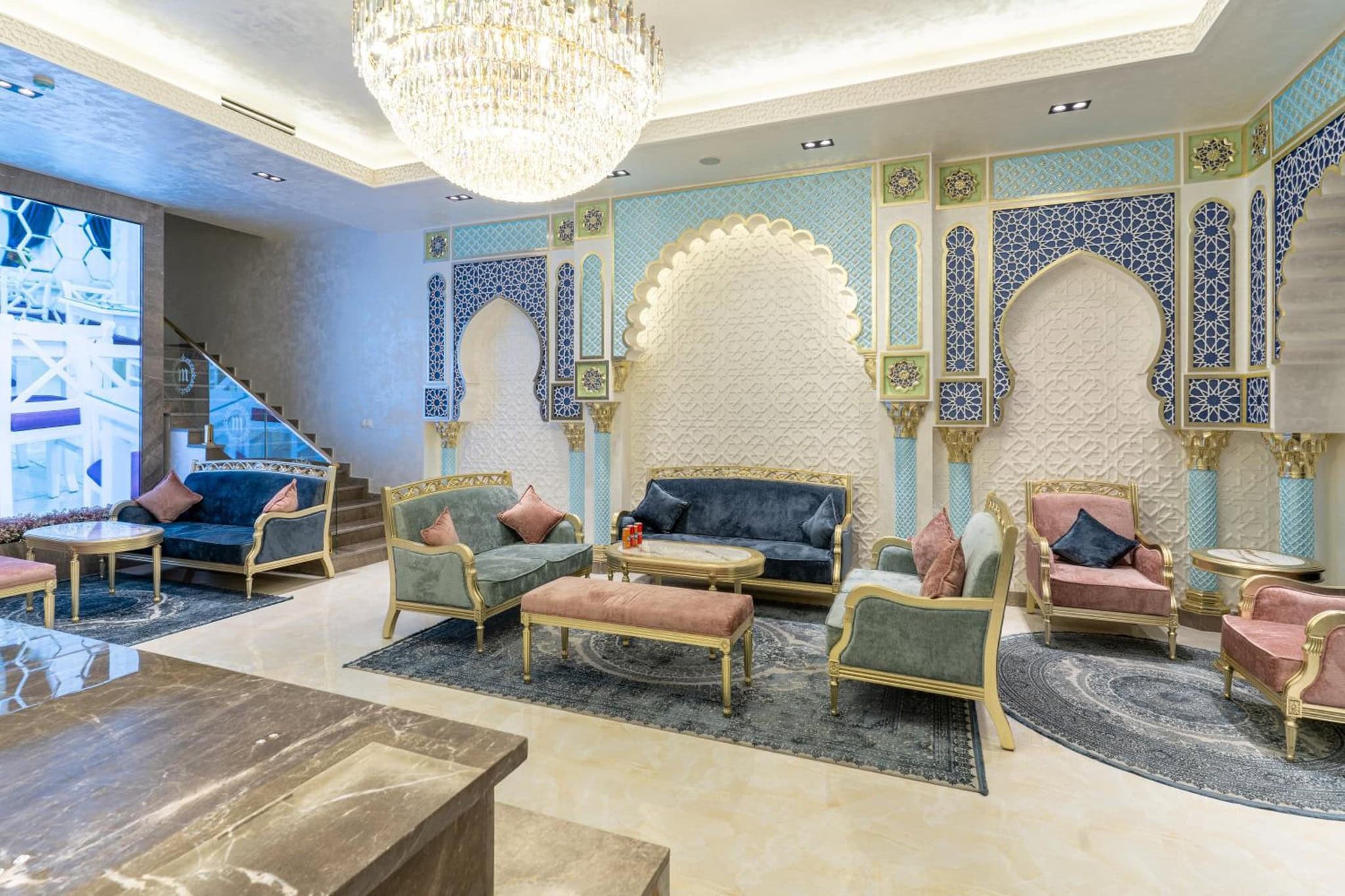
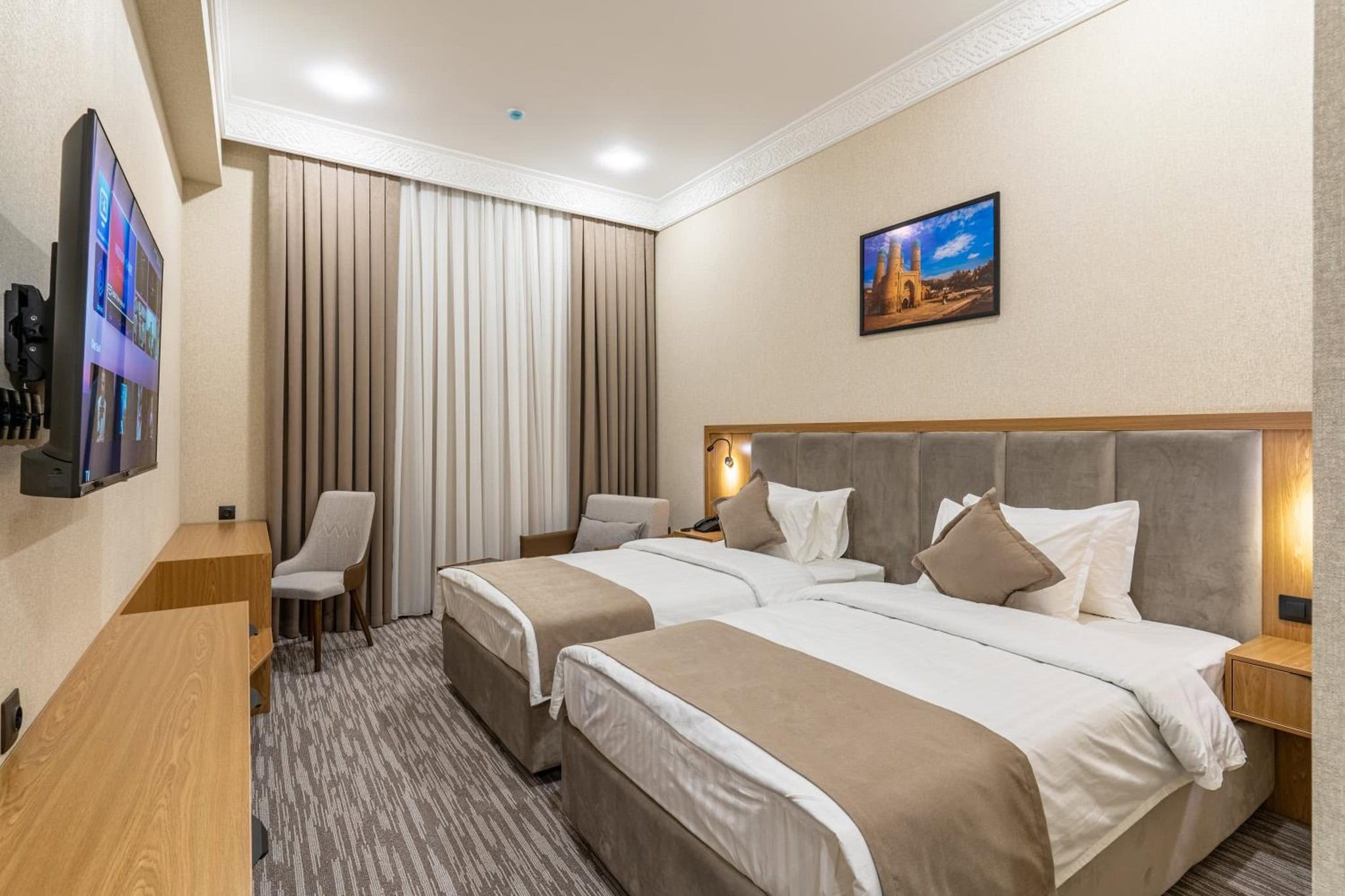
These are the hotels we plan to use. If one of them is not available for our dates, we replace it with something of the same standard and as close to the old town. Hotel photos: Booking.com.
If you cancel:
An additional cancellation fee of 150 EUR applies.
Below, you find the carefully designed day-by-day itinerary. The plan can be adjusted to accommodate the group’s pace and weather conditions.
Fly in to Urgench on the afternoon service from Istanbul, which lands in the early evening. You are met at the airport and driven the 40 minutes to Khiva. Allowing for luggage and formalities, you should be at a hotel inside the old walls before nine.
Nothing else is asked of you tonight. For anyone who wants to be out for the sunrise in the morning, we meet briefly at half past nine to go through what to bring and when to be downstairs. Everything else waits until breakfast. If you would rather arrive a day early, we can book the night before at the same hotel for a supplement.
Note for non-photographers: the tour proper starts tomorrow at breakfast. Tonight is only an arrival.
Meals: None, the tour starts with breakfast on day 2
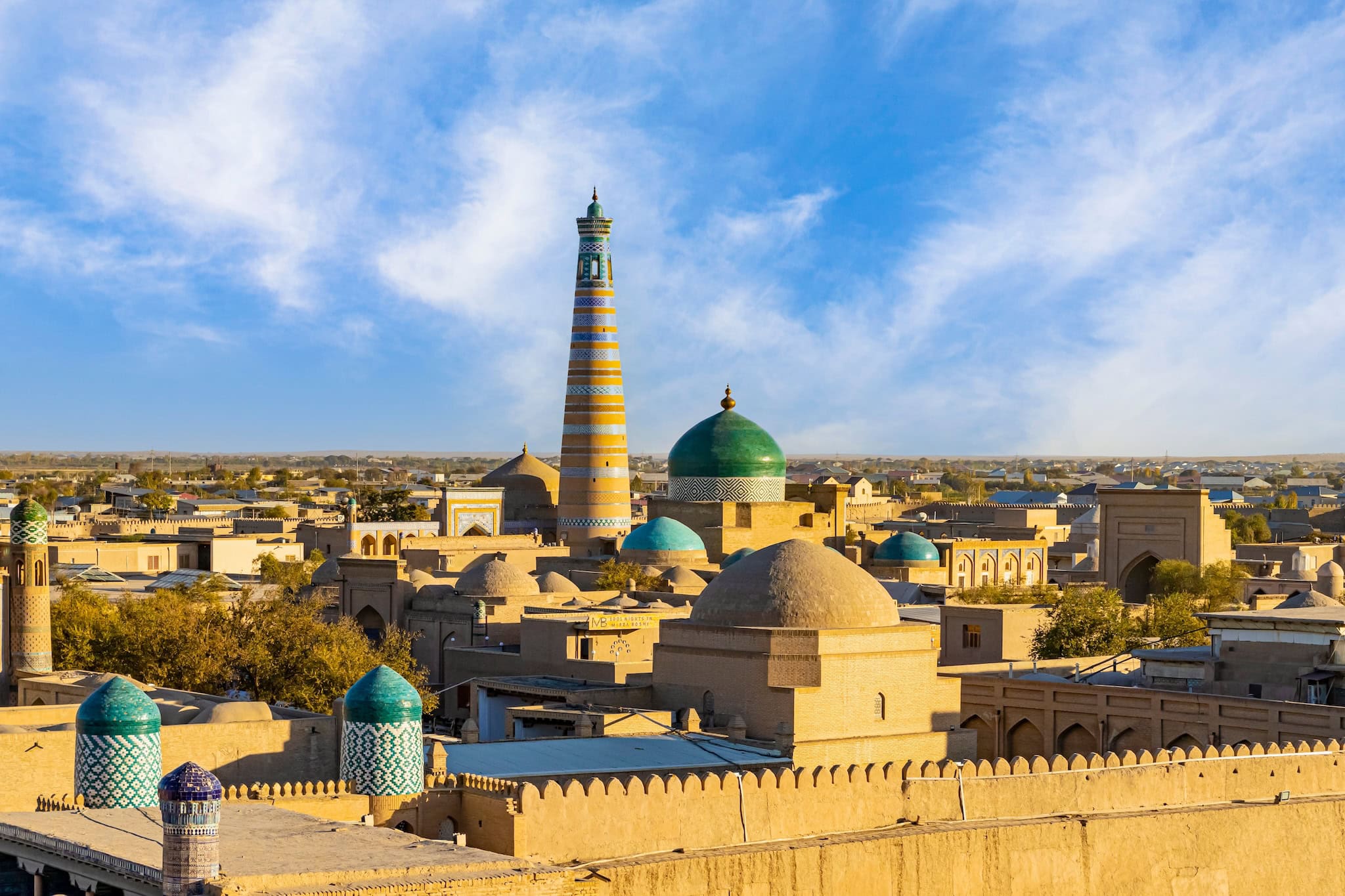
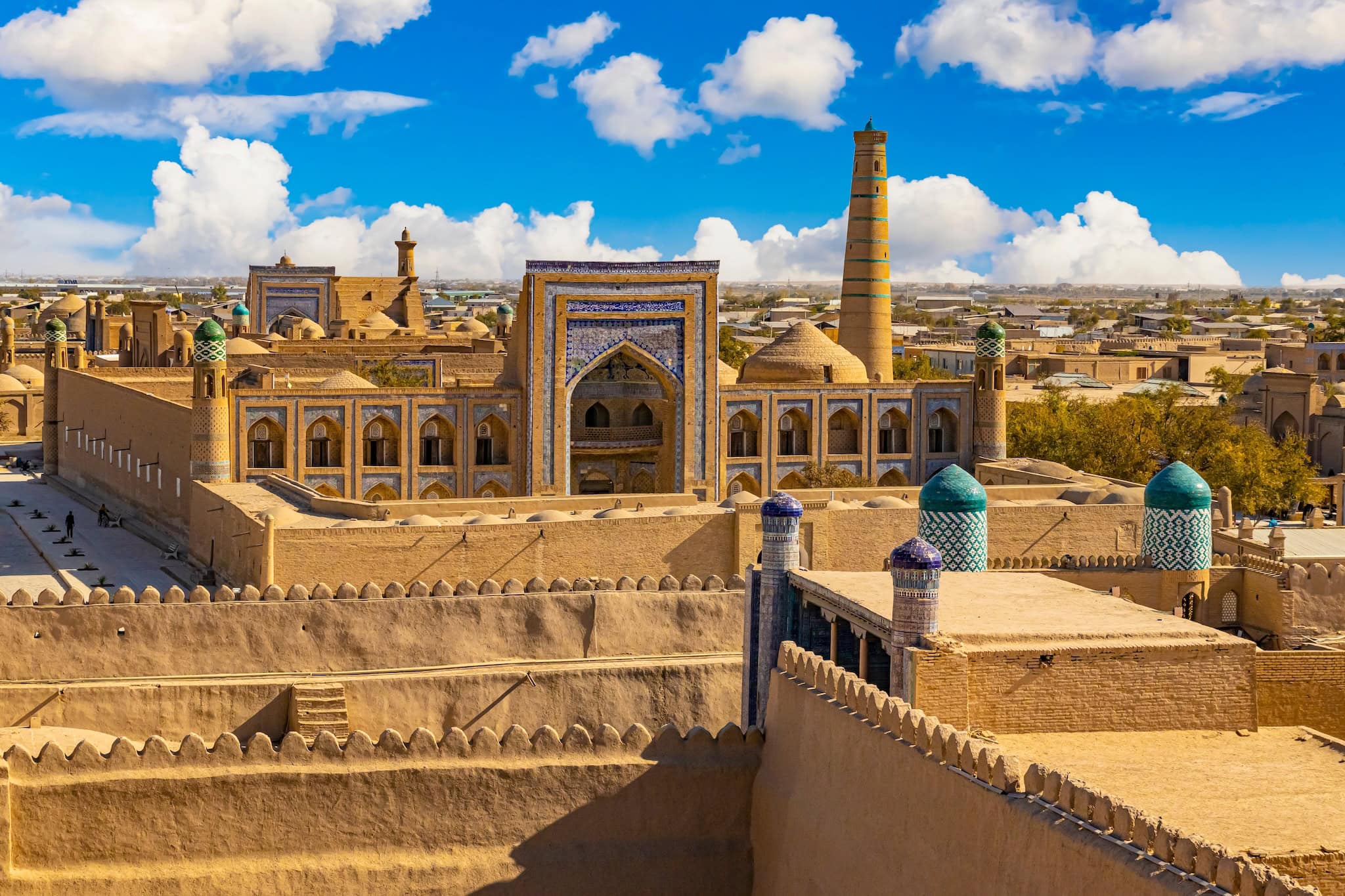
The first morning is optional. Sunrise is around twenty past seven, and anyone who wants it is up on the city walls for the blue hour before it, looking across a skyline of flat roofs, minarets and turquoise domes with the desert beyond. This is the shot Khiva is known for.
We all meet properly over breakfast, where we go through how the next ten days are put together. Then we walk Itchan Kala, the walled inner town, with a local guide: the Juma Mosque and its forest of carved wooden columns, the tiled courtyards of the Tash Hauli palace, the Kunya Ark citadel, and the Pahlavon Mahmud mausoleum.
Khiva is small, and that is exactly why it gets two days. The whole walled town crosses in fifteen minutes, so you can come back to the same courtyard three times and catch it in three different lights. Midday is free for a rest or for wandering at your own pace. Anyone happy with a steep, narrow stair can climb the Islam Khodja minaret, the tallest in Khiva, for the best view over the rooftops.
Late afternoon we regroup for golden hour and sunset inside the walls, working the main axis and the fat turquoise stump of the Kalta Minor minaret, and stay on into blue hour. Welcome dinner in the old town.
Note for non-photographers: Khiva is a browsing town. Silk, ceramics and wood carving are made and sold within a few streets, and nothing is far from your room.
Meals: Breakfast, lunch and welcome dinner
An early start for something that only happens on a Sunday. We leave Khiva before six for the livestock market outside Urgench, where farmers from across the region trade sheep and cattle from first light and the haggling is at its loudest before nine. We stay for about an hour and a half as the light comes up, then go straight on to the airport. Breakfast is packed for us to take on the road.
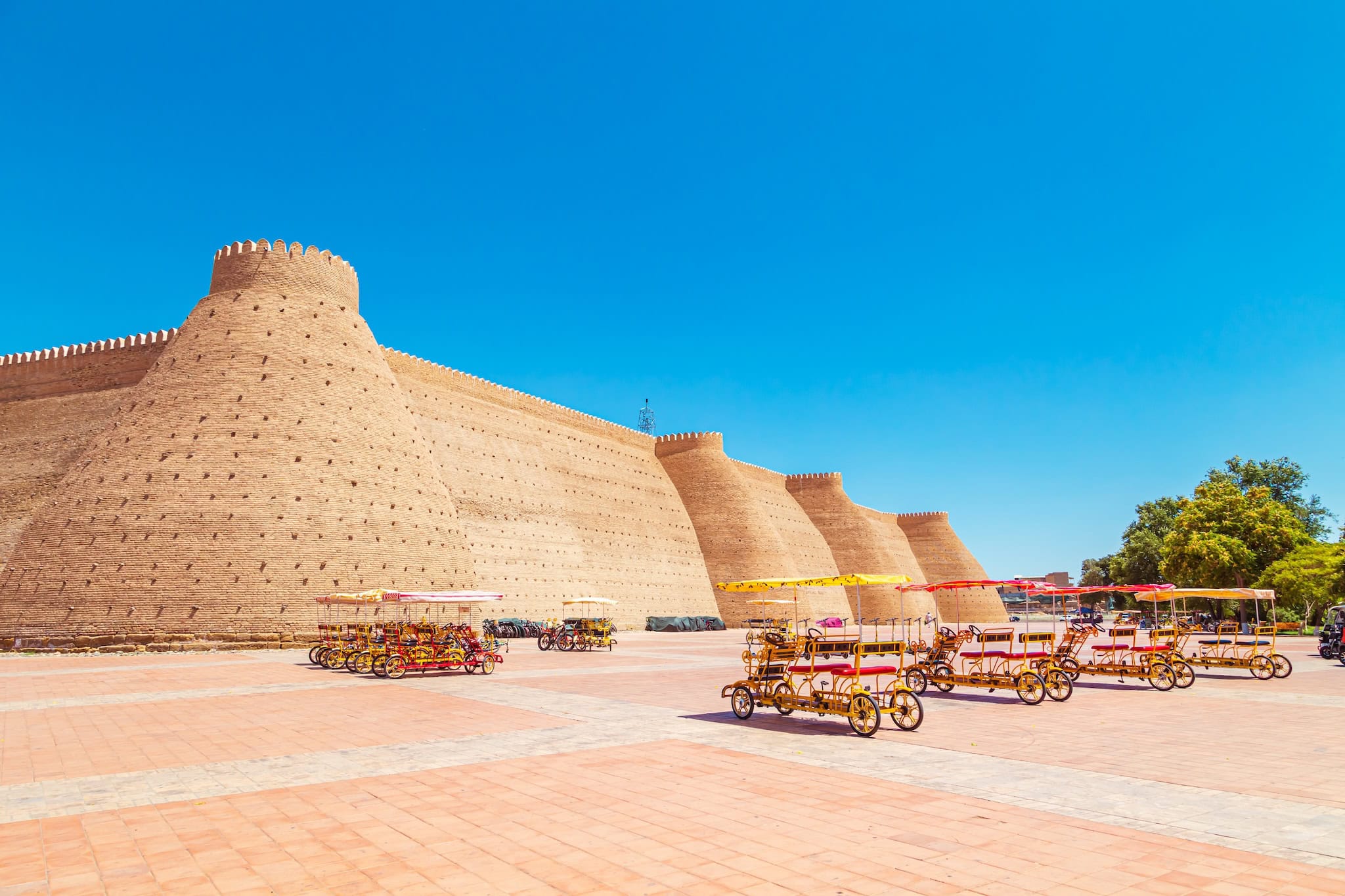
The short morning flight to Bukhara crosses the Kyzylkum desert and the Amu Darya, the river the Greeks knew as the Oxus, in about an hour. Bukhara was one of the great cities of the Islamic world, a place people came to study rather than pass through, and its old town is a UNESCO World Heritage Site with more than a hundred protected buildings. We leave our bags at the hotel, take a slow lunch while the rooms are made ready, and after check-in walk over to the Ark, the mud-brick fortress the emirs ruled from for a thousand years.
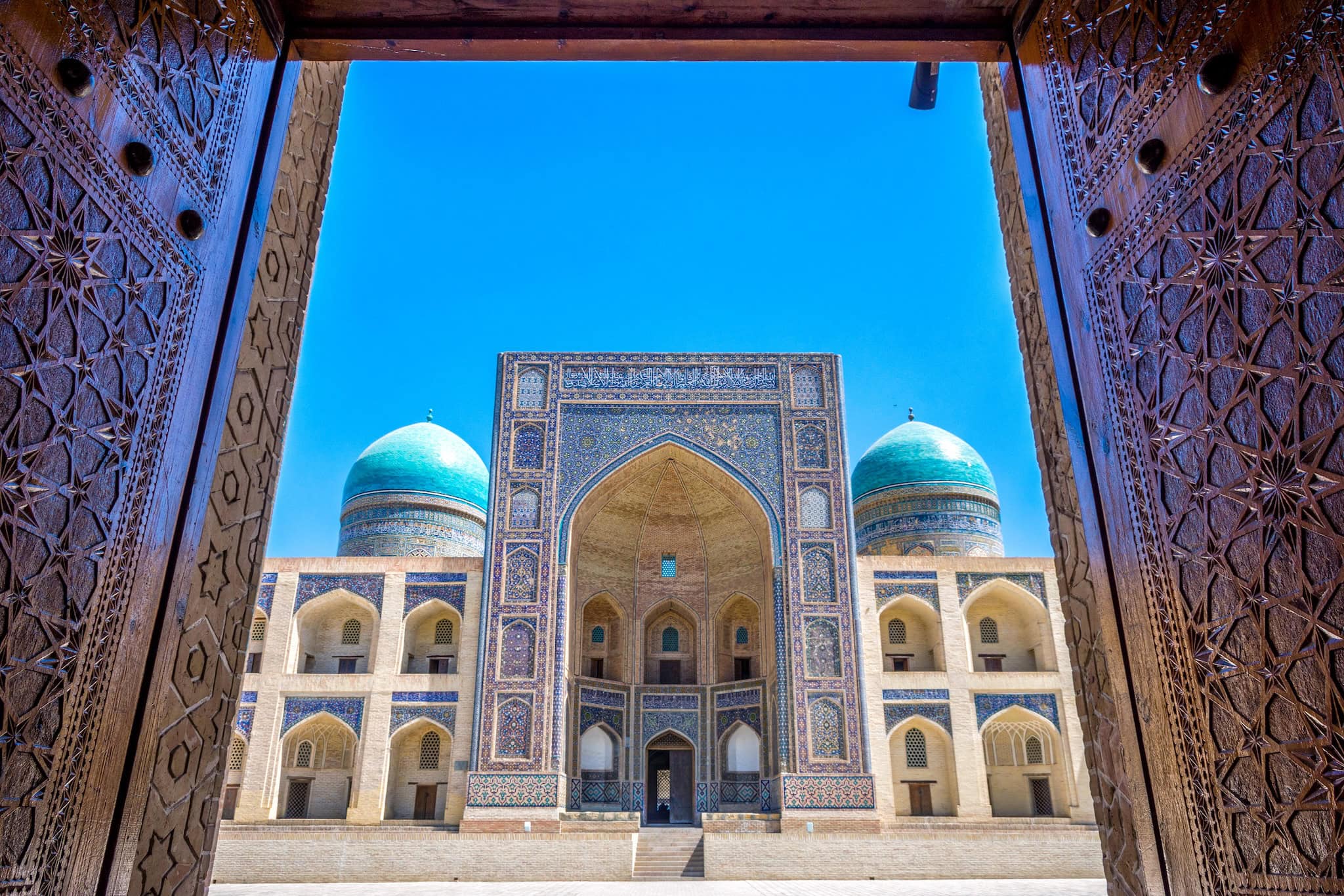
Sunset is around ten to six, spent at Po-i-Kalyan, the religious complex at the heart of the old town: a twelfth-century minaret nearly fifty metres tall, a mosque that holds thousands, and the blue domes of the Mir-i-Arab madrasah across the square. The brick goes gold, then rose, then floodlit. Dinner follows with the square lit below.
Note for non-photographers: the market is loud, earthy and real, a side of the country no monument shows you. Wear shoes you do not mind getting dusty.
Meals: Packed breakfast, lunch and dinner
We are out before sunrise, which is around seven, and the blue hour before it is half the reason to get up. We are back at Po-i-Kalyan from the other side, the first light coming through the blue domes of the Mir-i-Arab madrasah while the minaret throws its shadow across an empty square.
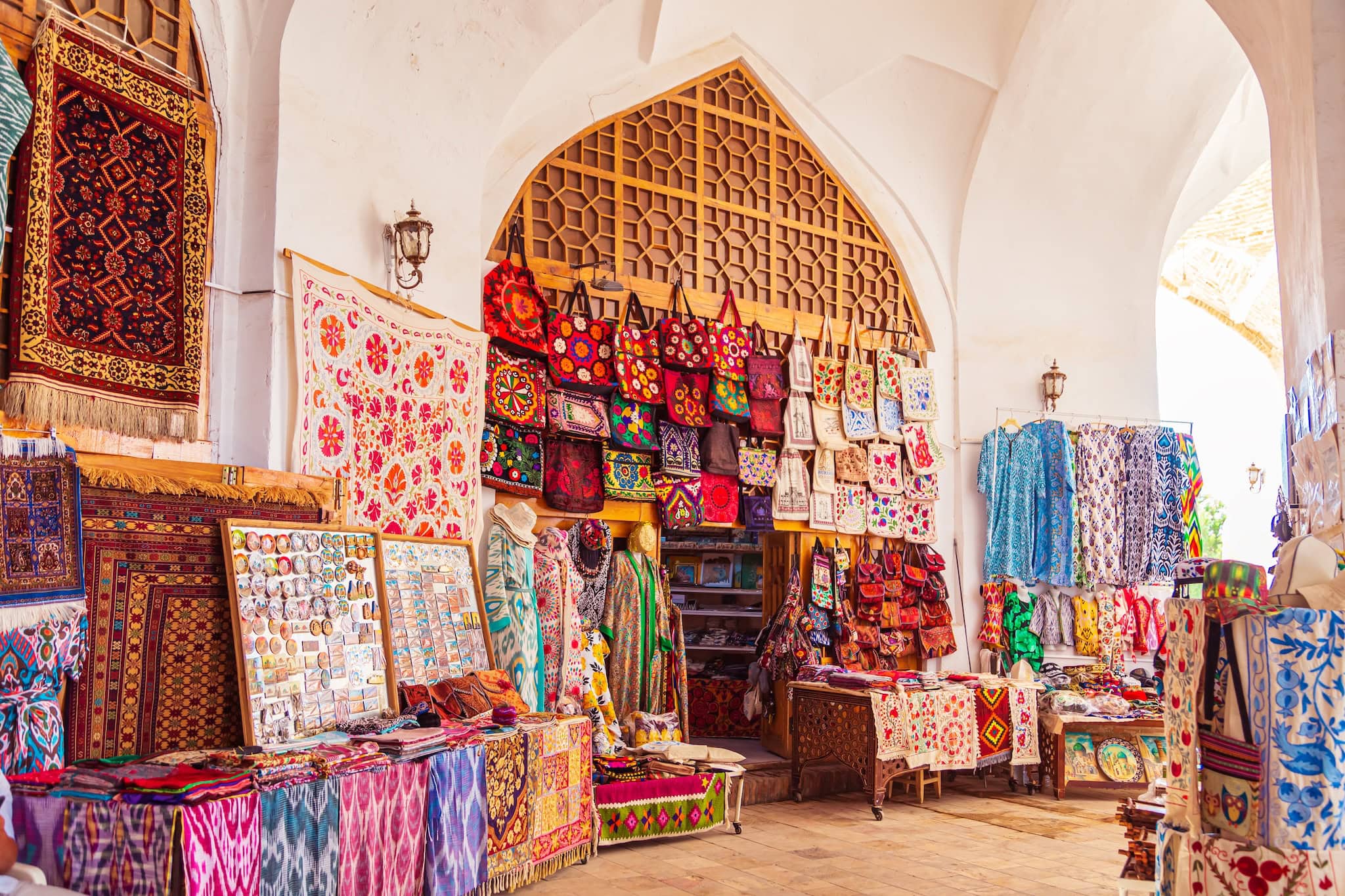
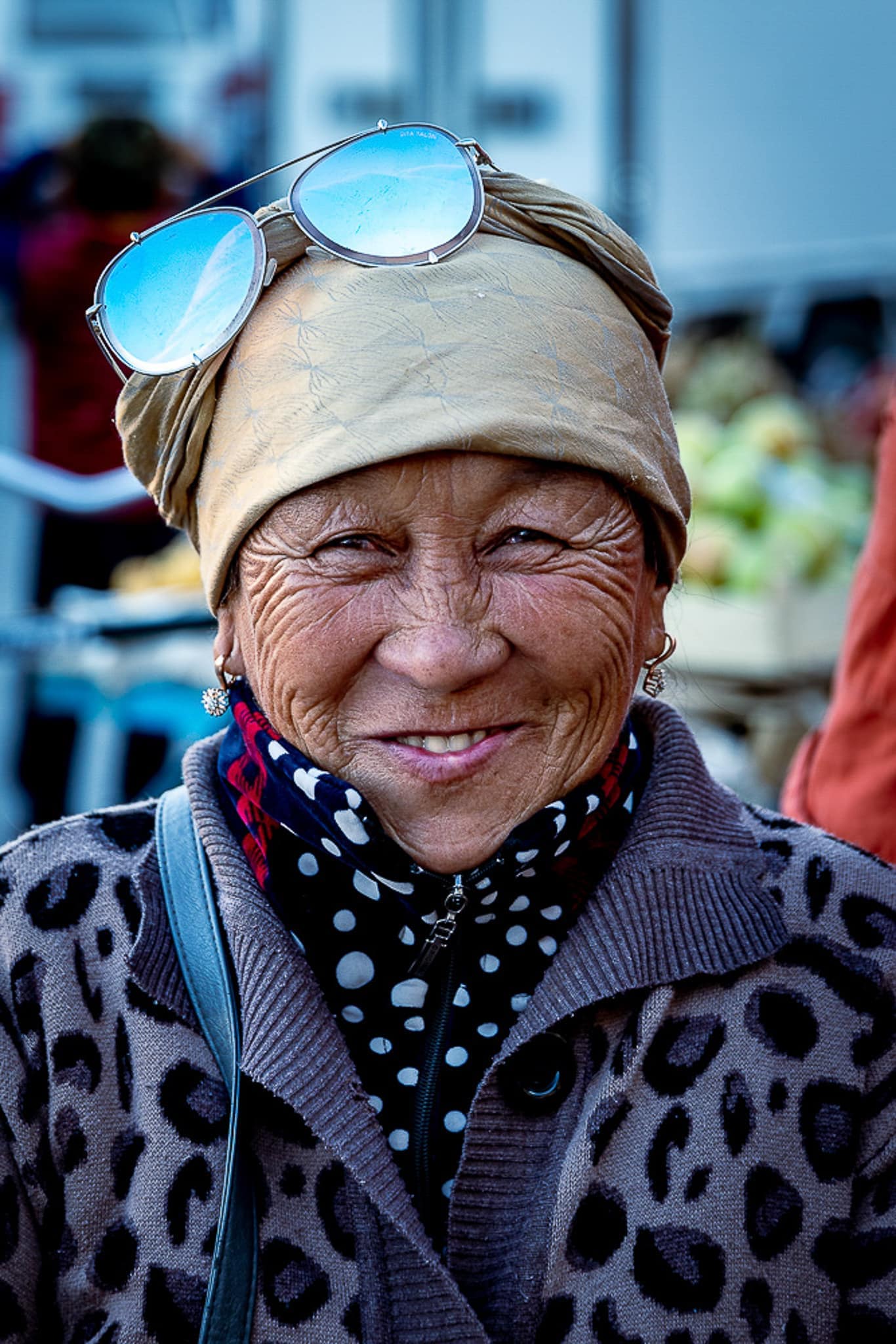
After breakfast we explore the covered bazaars: domed crossroads where money changers, hat makers and jewellers have traded for five centuries, with light falling in shafts through the openings in the roofs. Expect the smell of cumin and sheepskin, a good deal of noise, and shopkeepers entirely used to being photographed. After a break in the middle of the day we walk out to the Bolo-Hauz mosque, its forty wooden columns doubled in the pool in front of it, and the Samanid Mausoleum, a tenth-century brick cube that is the oldest thing standing in the city.
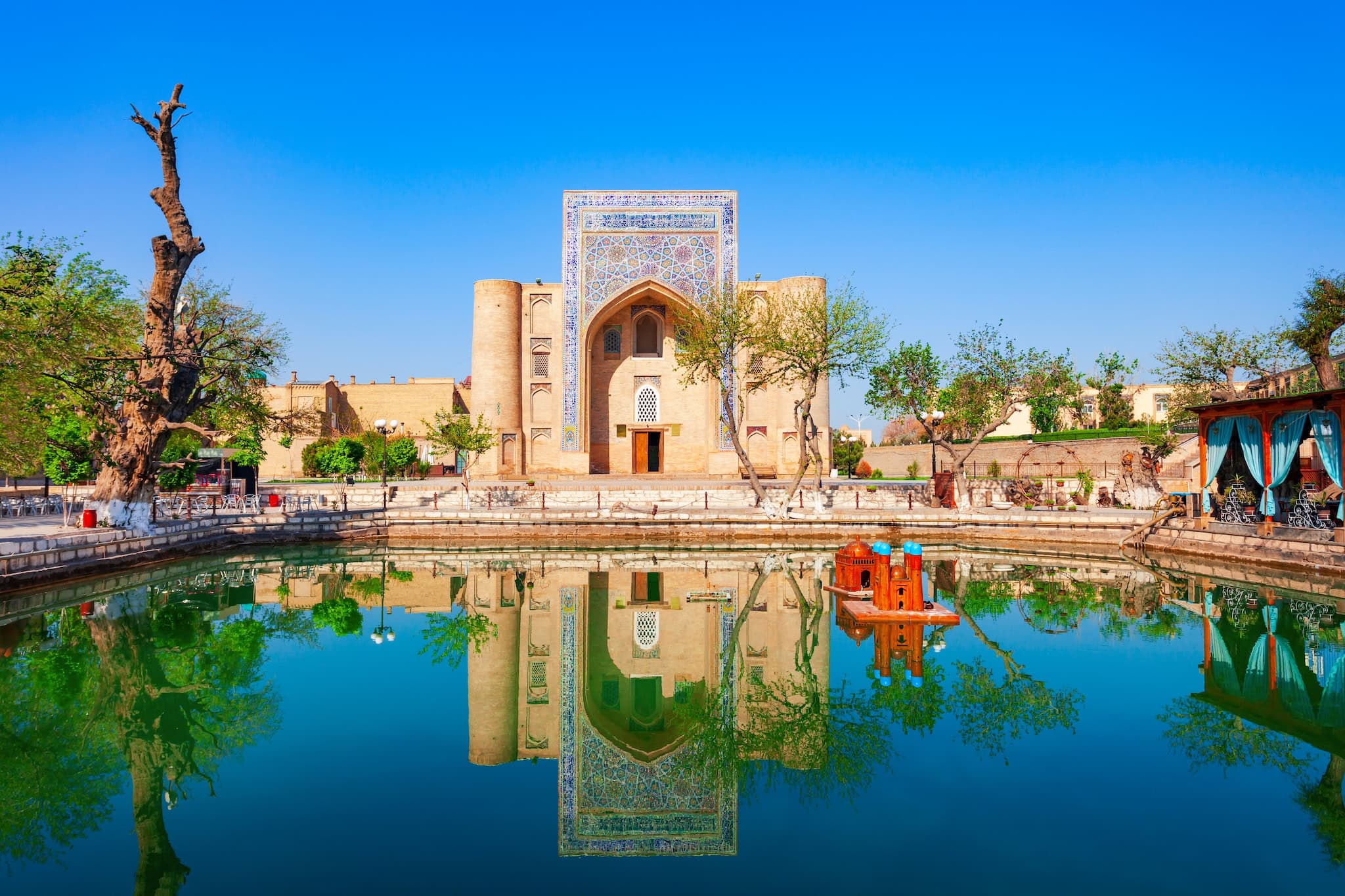
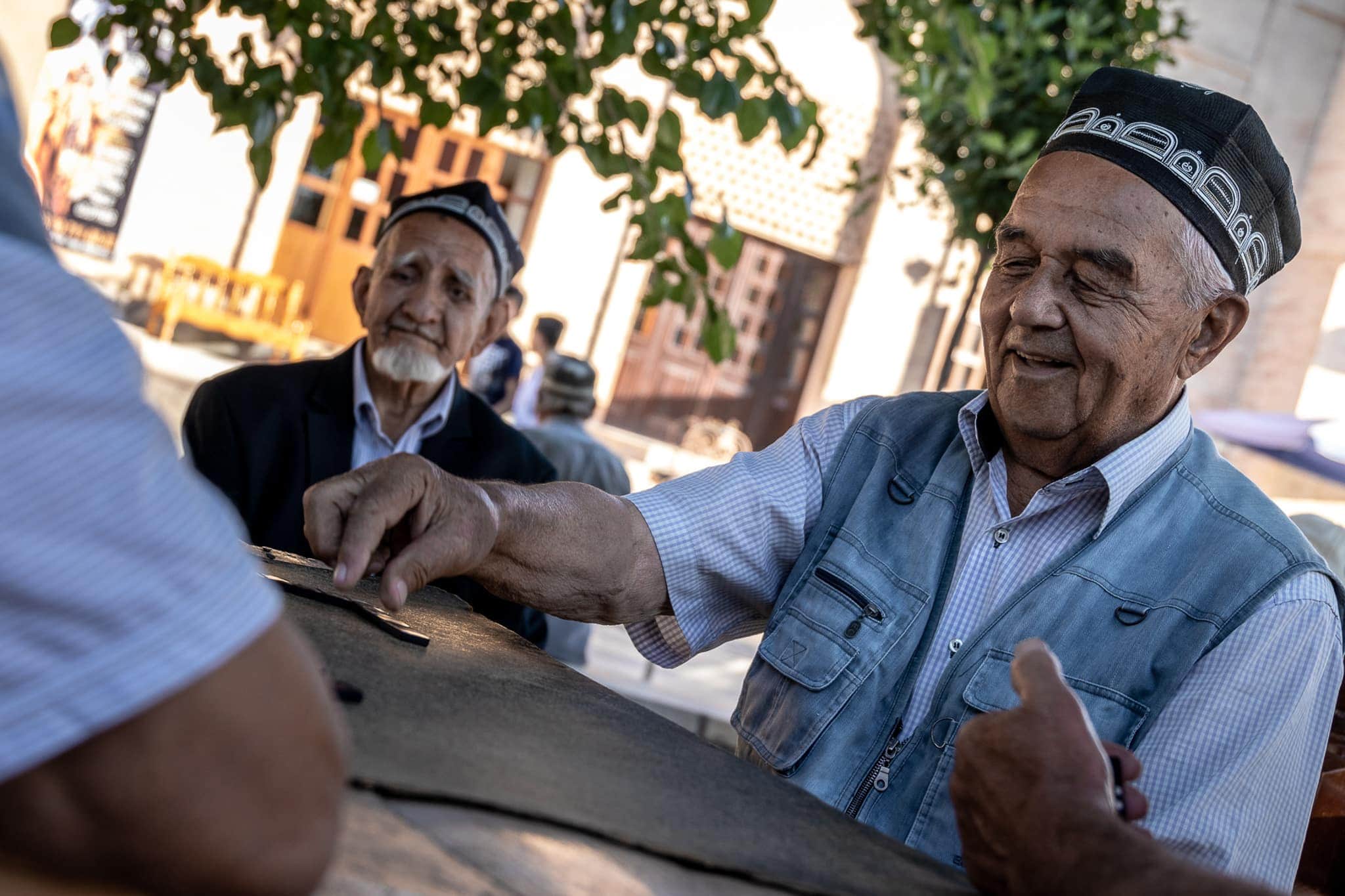
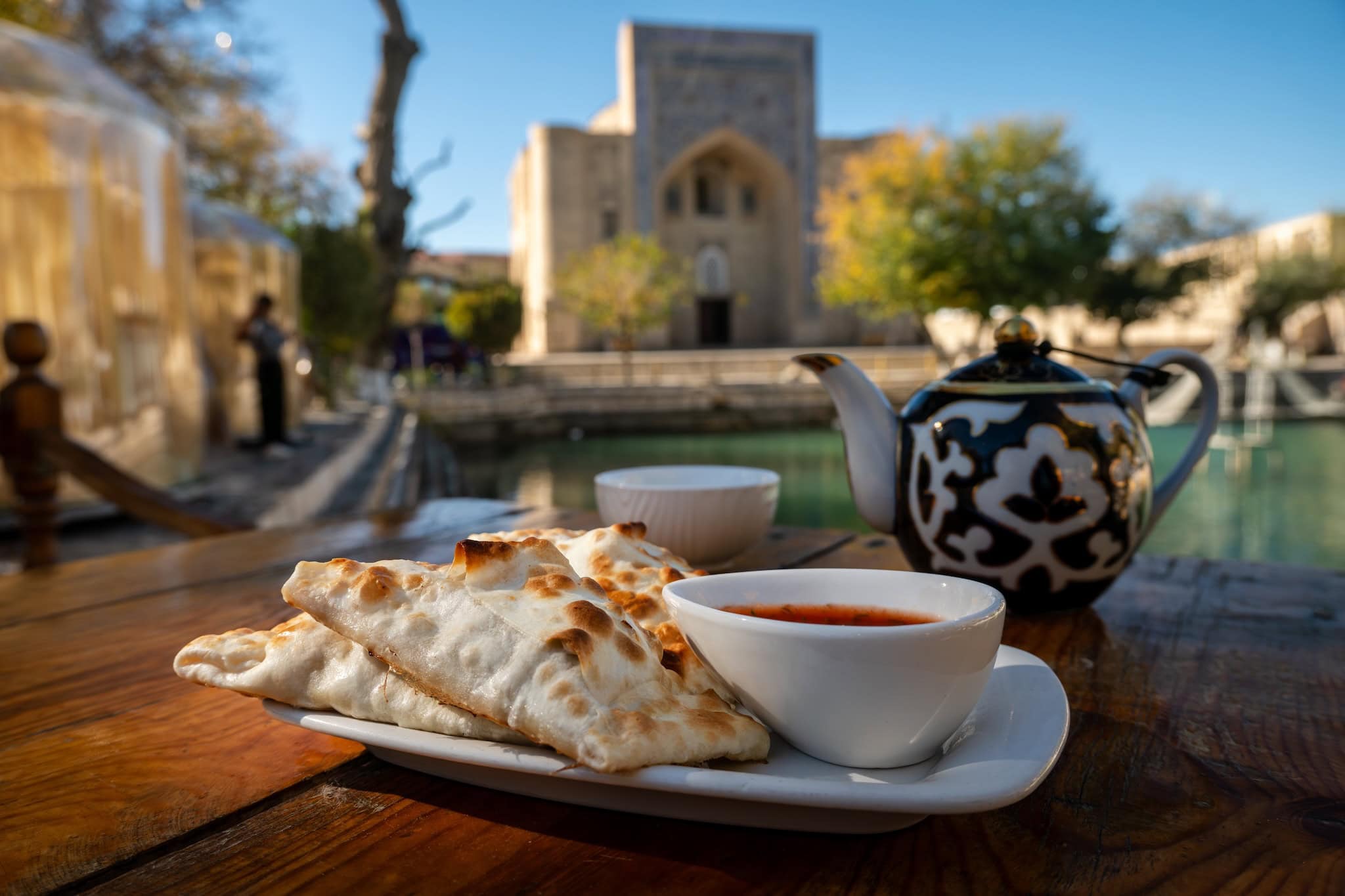
Sunset is around ten to six at the two madrasahs that face each other across a narrow square: the one Ulugh Beg, Timur’s grandson, built in 1417, and the far more ornate one Abdulaziz Khan added two centuries later. We finish at Lyabi-Hauz, the old pool square under its plane trees, as the lights come on and the tea houses fill up.
Note for non-photographers: the old town is flat and compact, and the trading domes are the best shopping in Uzbekistan.
Meals: Breakfast and dinner
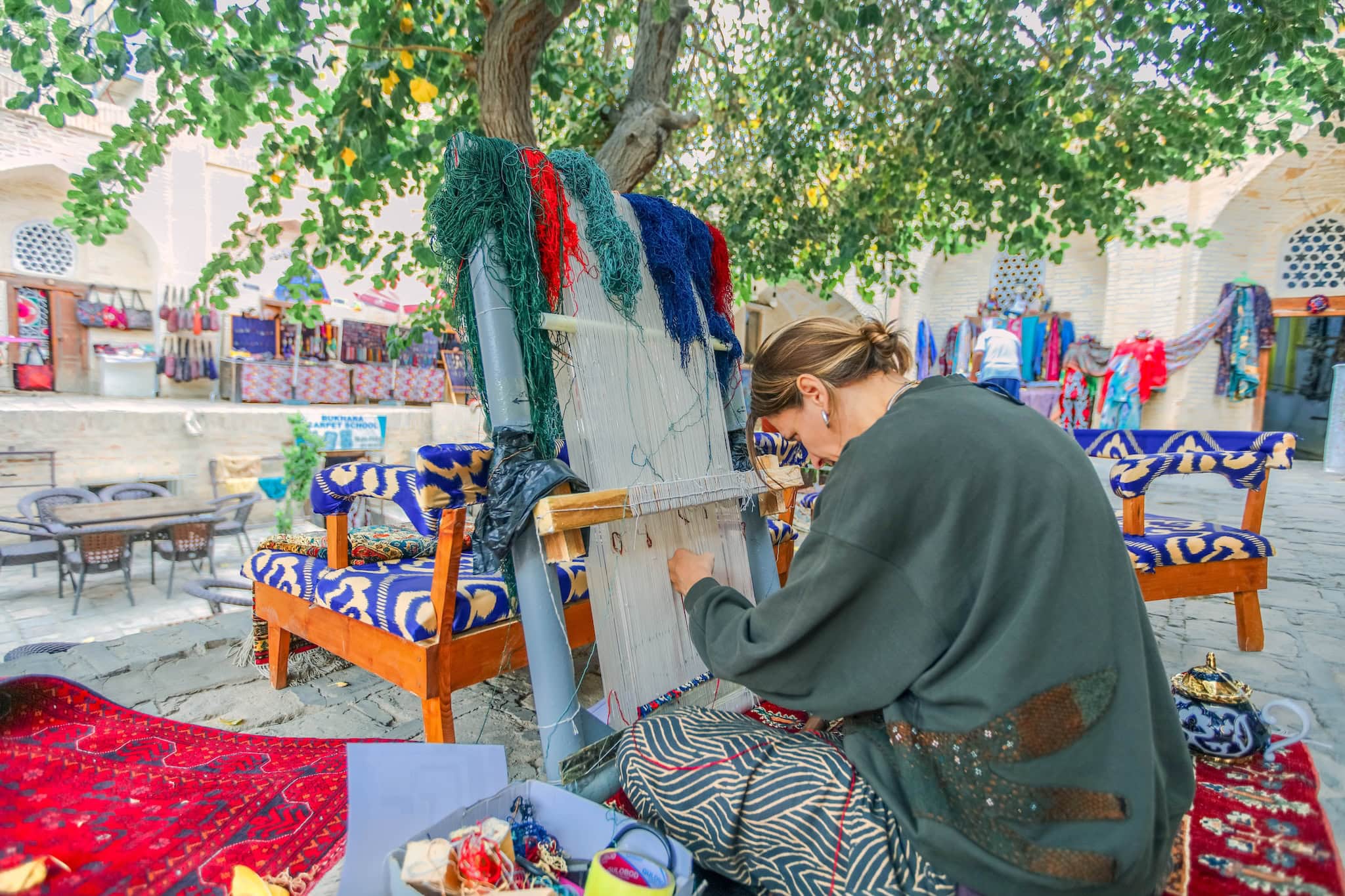
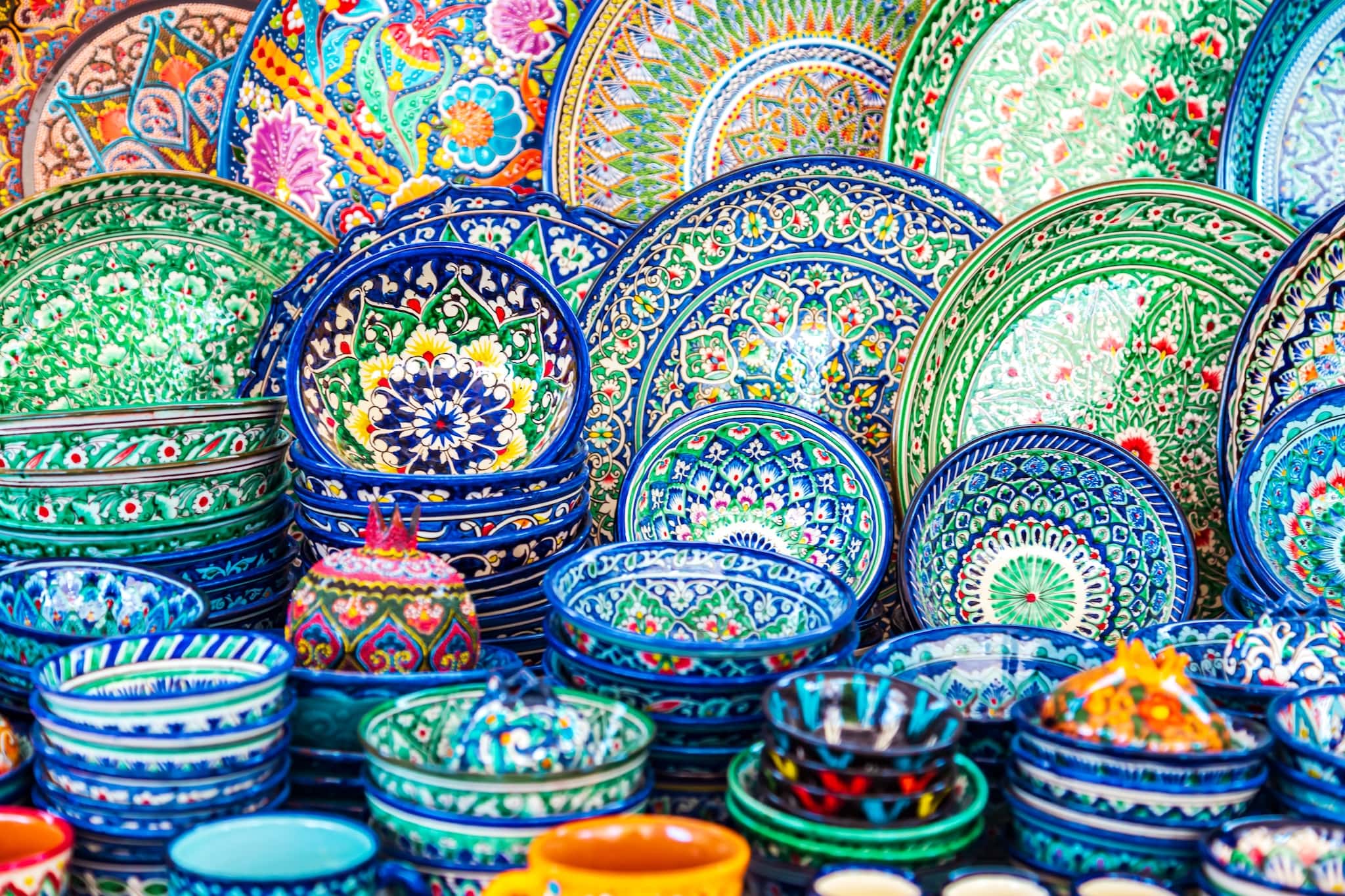
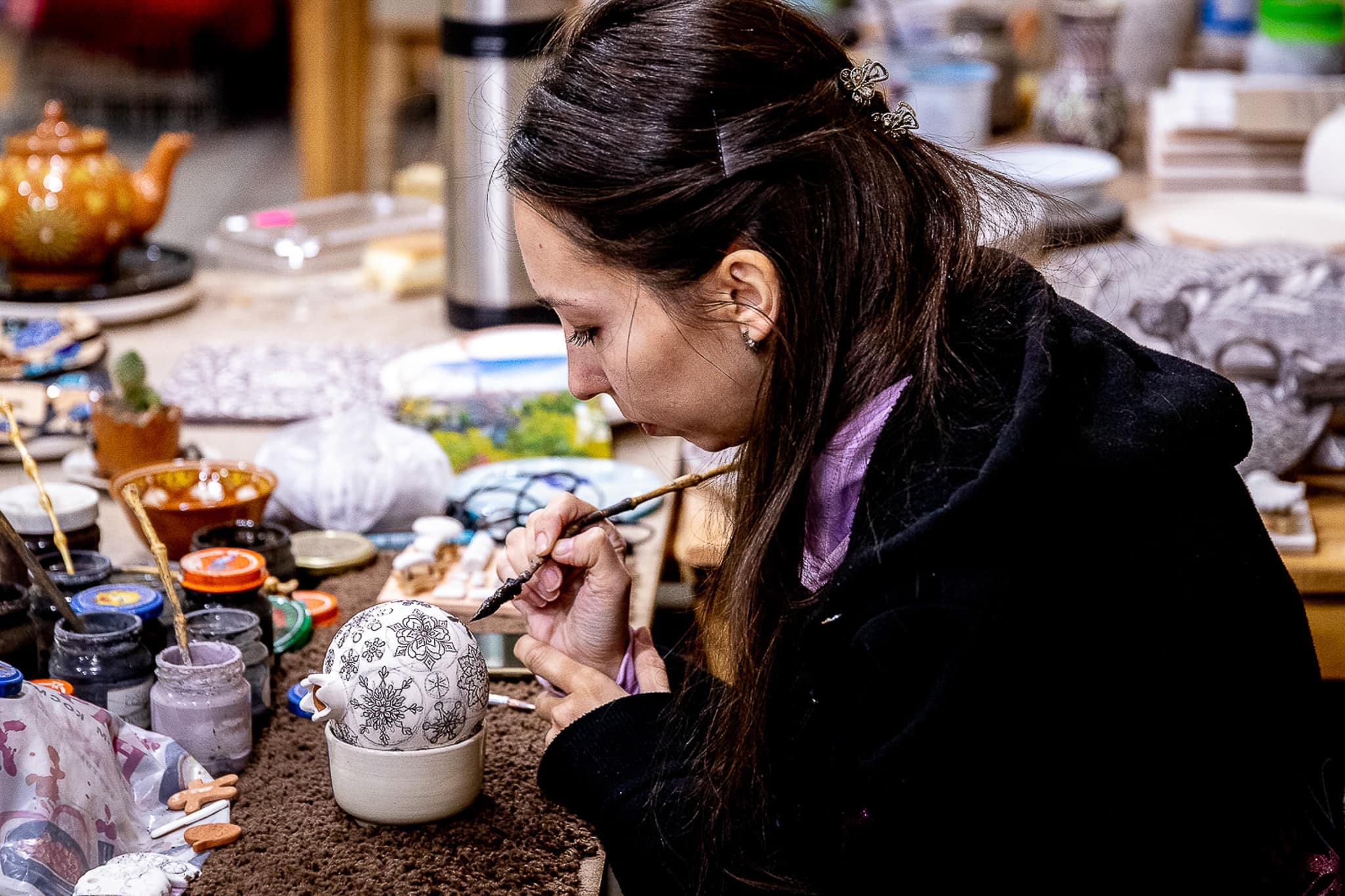
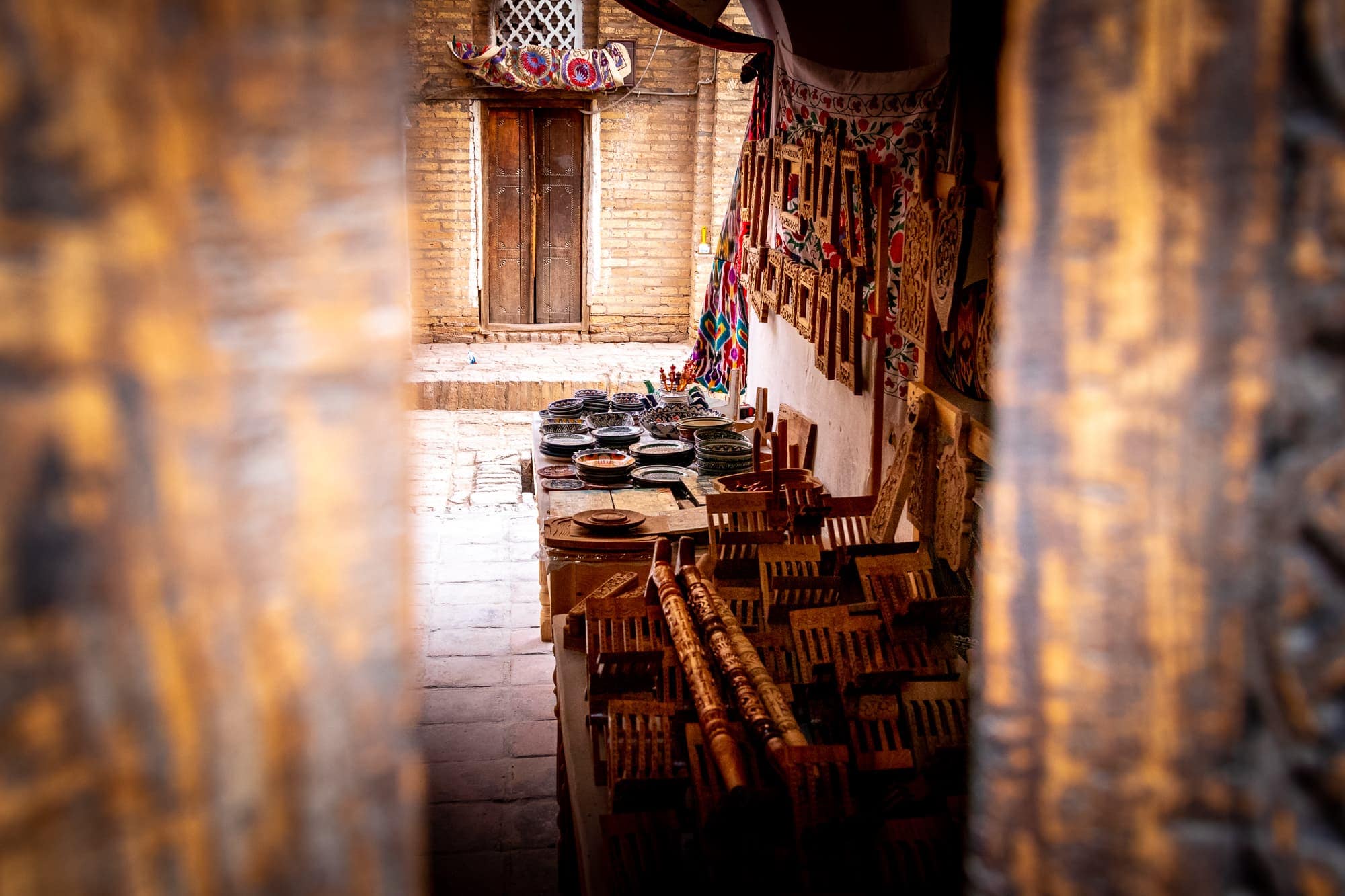
We drive out to Gijduvan in the morning to a family ceramic workshop and a carpet workshop, where the work is done in front of you: the wheel, the glaze, the loom. This is the day for environmental portraits and for the close detail frames that give a travel story its texture. On the way back we stop at the Naqshbandi complex, the burial place of the founder of one of the great Sufi orders and still a place of pilgrimage, and at Sitorai Mokhi-Khosa, the last emir’s summer palace, where Russian and Bukharan taste collide in one building.
The afternoon is free for a rest in Bukhara.
In the evening we go to a traditional music and dance performance with dinner in the courtyard of the Nadir Divan-Begi madrasah on Lyabi-Hauz. Uzbek dance is regional, and an evening like this moves through several styles in an hour: the delicate wrist work of the Ferghana valley, the trembling hands of Khorezm, and Bukhara’s own, the most acrobatic of the three, with fast spins and a proud carriage. Live musicians, gold-embroidered costumes, a stage lit against five-hundred-year-old brick. It is a low-light subject, so we use it to practise high ISO, mixed lighting and catching movement.
Note for non-photographers: the workshops and the performance are the most sociable day of the trip, and the evening needs no camera at all.
Meals: Breakfast, lunch and dinner
We are out for blue hour and sunrise, around seven, at Chor Minor, the small four-towered gatehouse hidden in the back lanes, and then the walls of the Ark from the outside as the city wakes up.
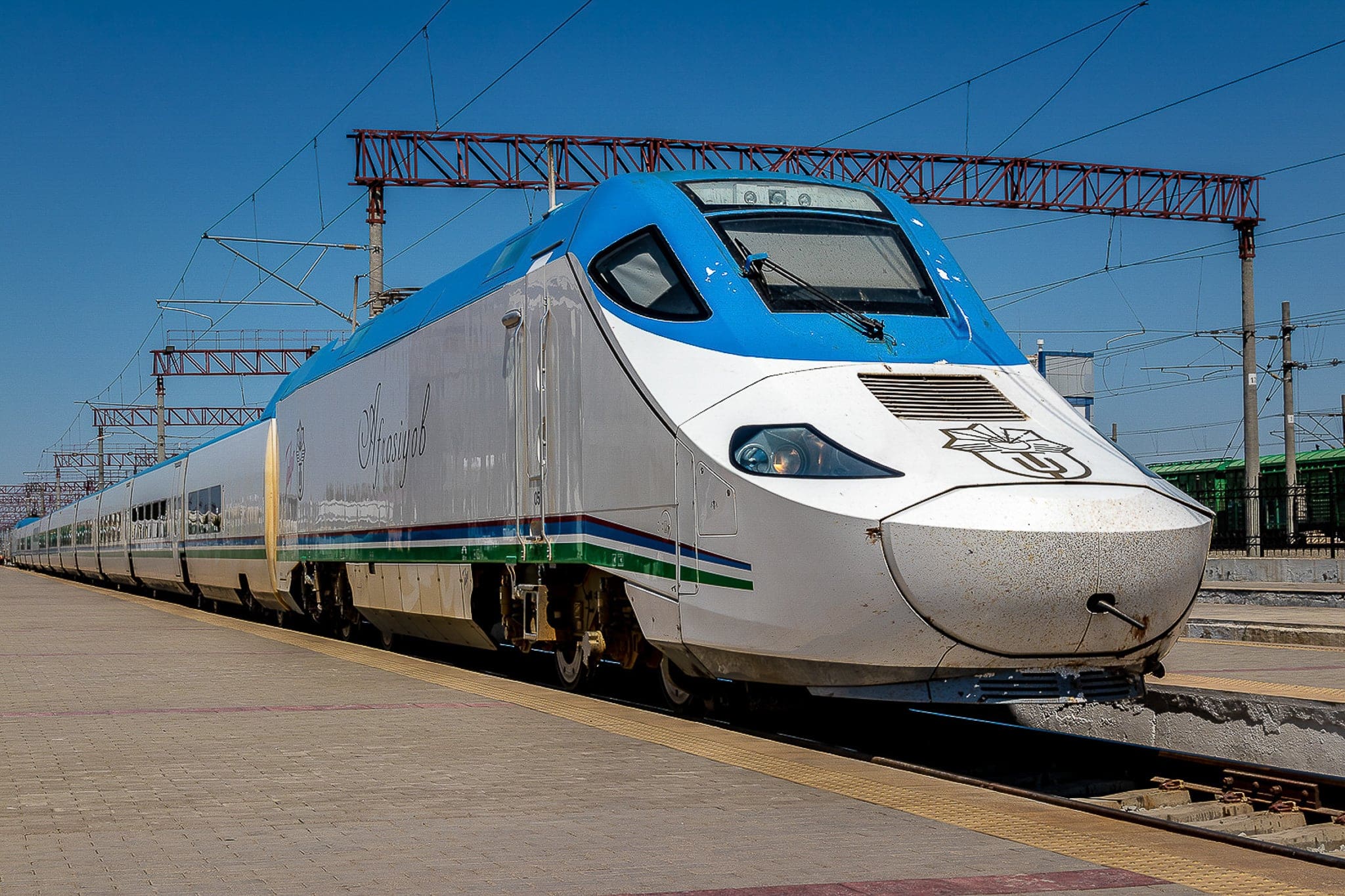
We come back for a late breakfast and the rest of the morning is free: the trading domes for a last piece of silk, tea under the plane trees at Lyabi-Hauz, or simply a slow pack. Lunch together, then we board the Afrosiyob high-speed train at 3pm. The ride takes a little over two hours through countryside that turns green as you approach Samarkand, and we arrive just before six.
Samarkand was Timur’s capital and he built it to be seen: the scale is imperial, the tilework is the best in Central Asia, and the city has been on this spot for two and a half thousand years. We check in and eat together. There is no sunset shoot tonight; the next three days give it the attention it deserves.
Note for non-photographers: nothing is asked of you before lunch and the whole old town is a five minute walk away. The Afrosiyob is modern, comfortable and a good place to watch the country go past.
Meals: Breakfast, lunch and dinner
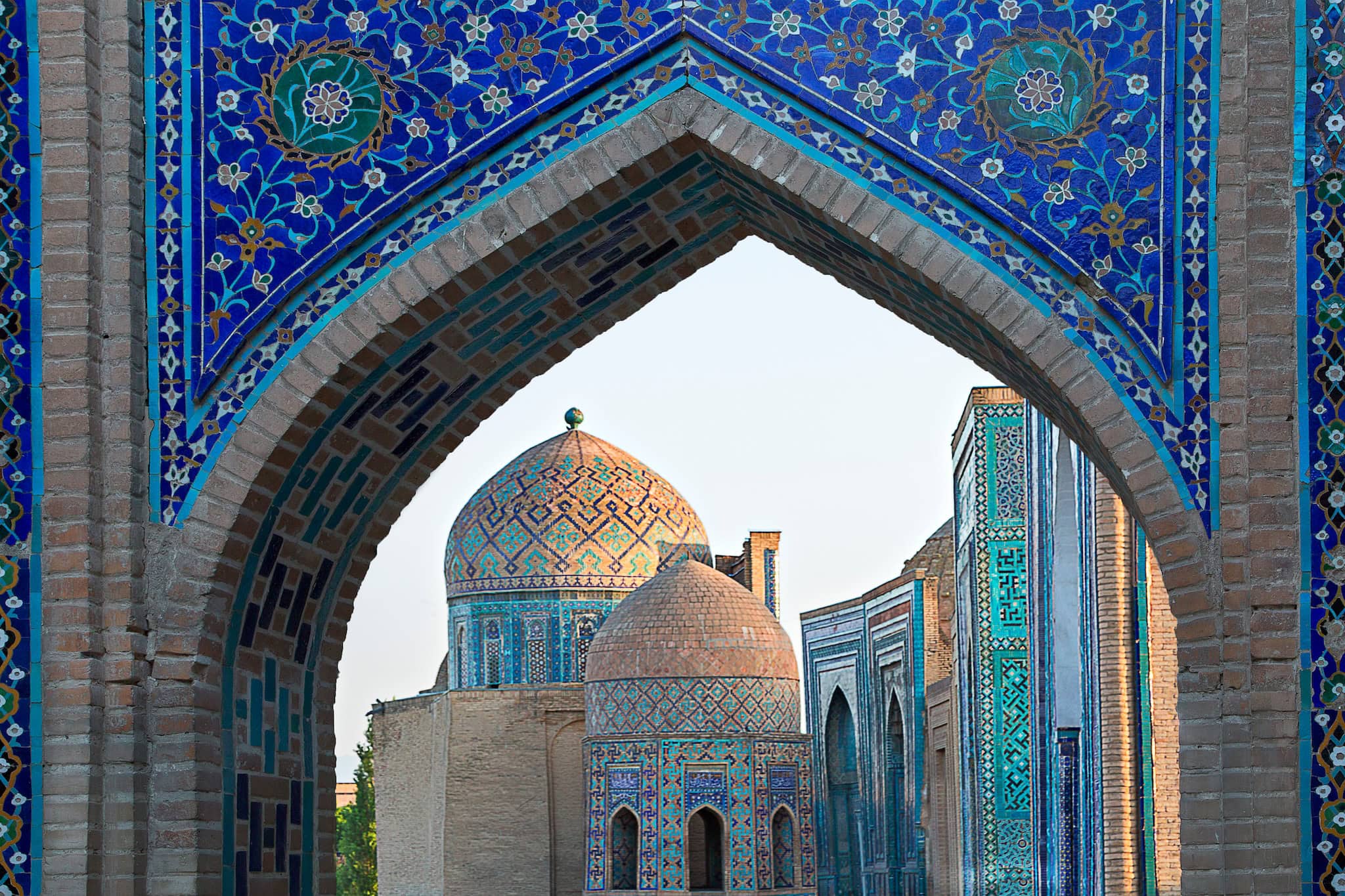
We are at Shah-i-Zinda, the avenue of tombs, for blue hour and sunrise just before seven, while it is still empty. Low side light down a narrow corridor of blue tile is the whole reason to be there early, and by mid-morning the experience is completely different.
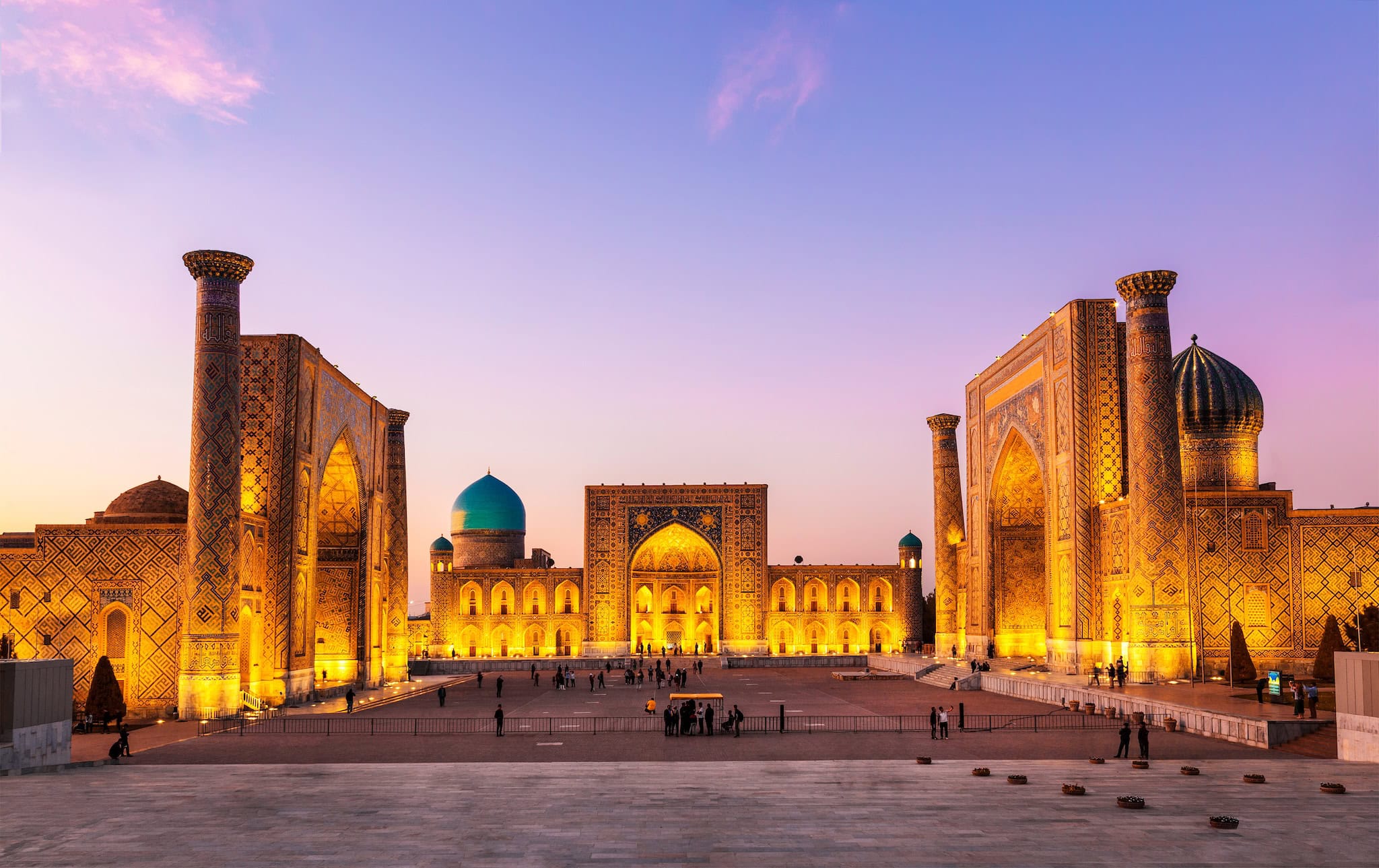
After breakfast we spend two hours at Registan with a local guide, who tells the story of the square and its three madrasahs before we come back to photograph it at sunset. Then Bibi Khanum, the mosque Timur built to be the largest in his empire, and the neighbouring Siab bazaar, which is where Samarkand does its everyday life: bread stamped with patterns, dried fruit, spices, faces. The middle of the day is free.
In the late afternoon we are at Registan Square for sunset, which falls just after half past five, and stay through blue hour, when the floodlights come up and the tilework goes electric. Dinner afterwards.
Note for non-photographers: the bazaar is the highlight of the day for most people, camera or not, and Registan in the evening is worth seeing simply as a spectacle.
Meals: Breakfast and dinner
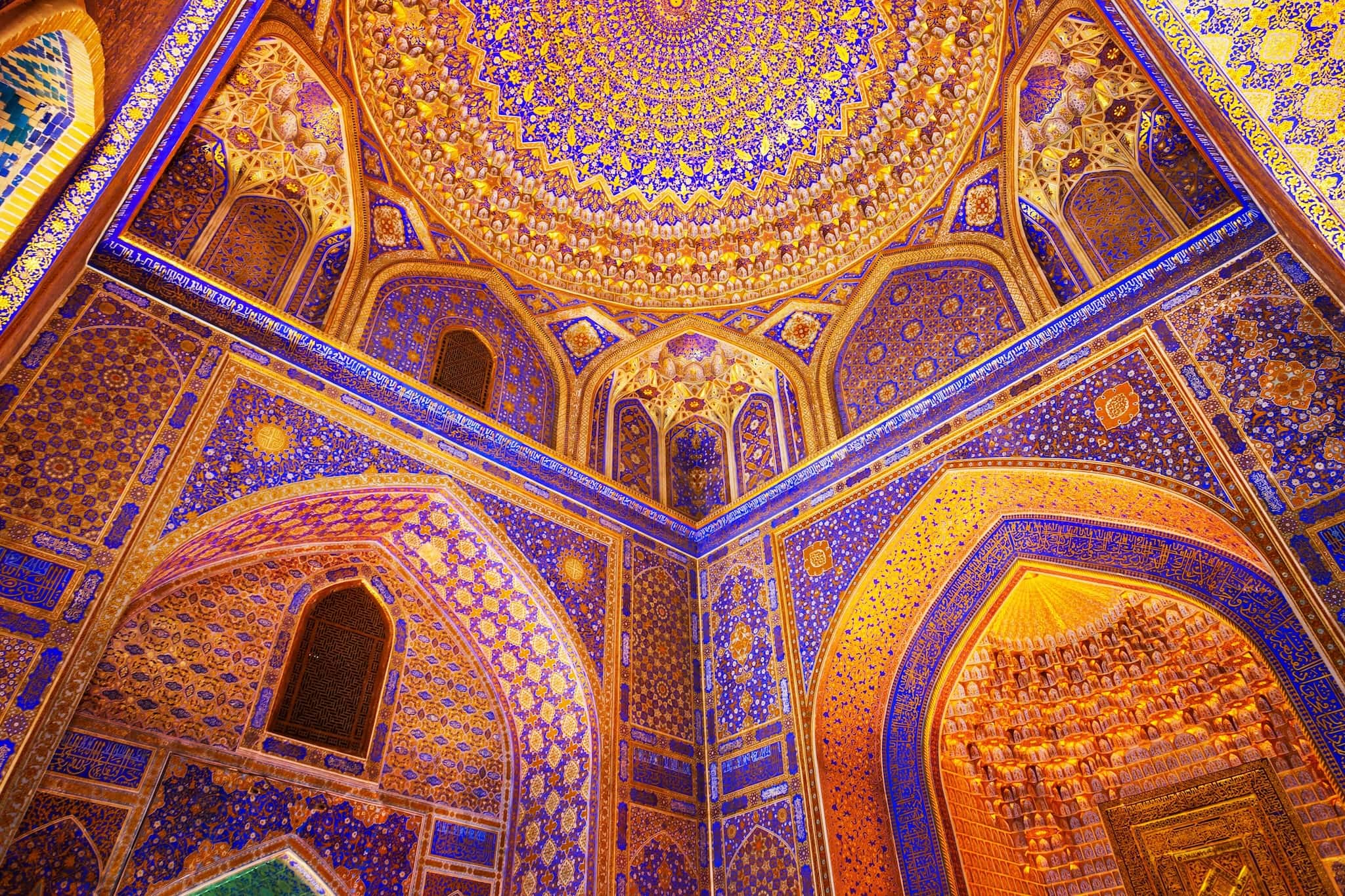
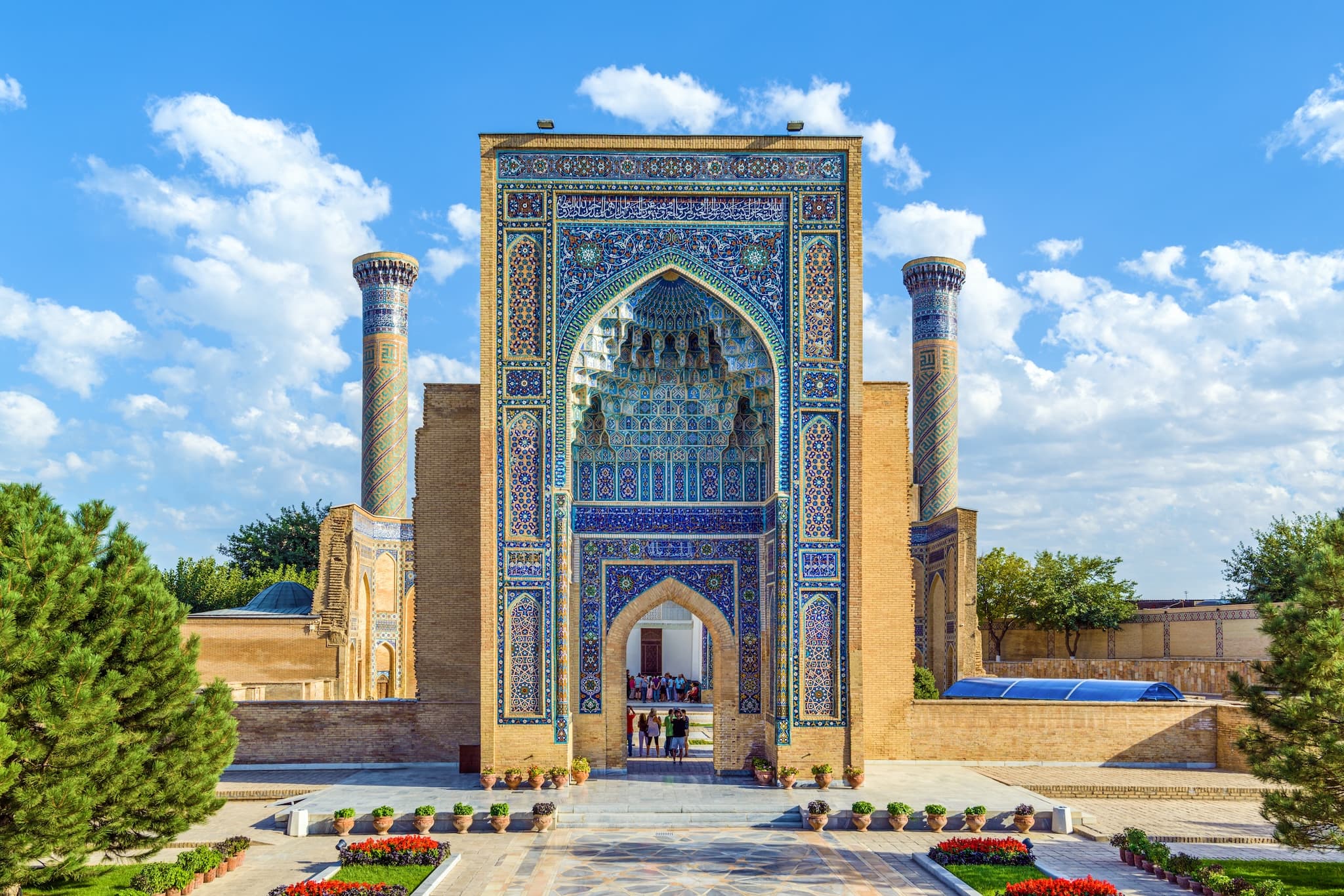
There is no sunrise shoot today, which is on purpose after two early mornings in a row. We start after breakfast at Gur-e-Amir, the mausoleum of Amir Timur, where the gilded interior and the ribbed dome want the sun properly up rather than the first grey of dawn.
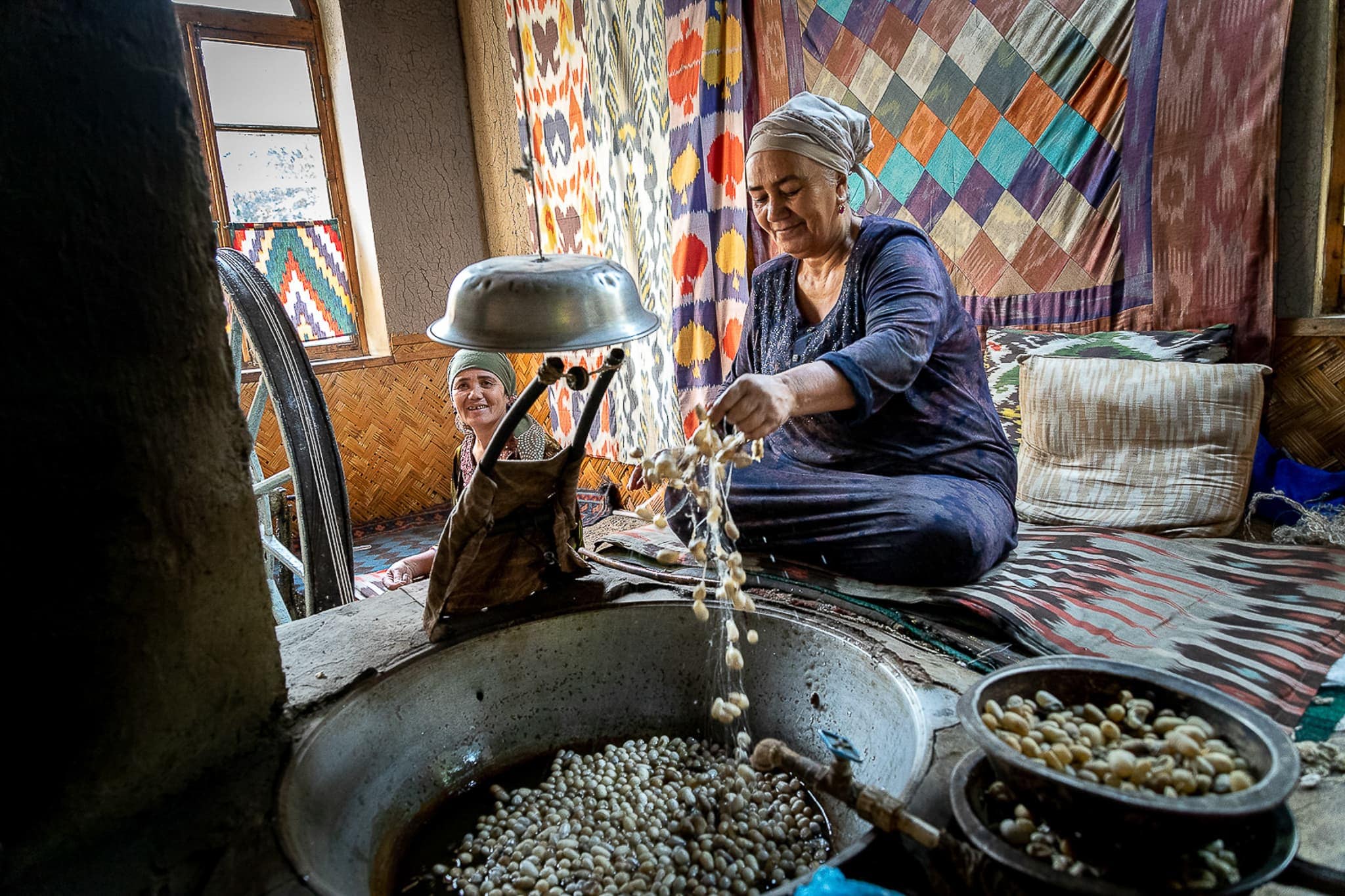
Around midday we drive out into the countryside to a working silk paper mill, where mulberry bark is still pounded by water-driven hammers and pressed into sheets by hand. It is a complete change of subject from the architecture, it works in hard midday light because most of it is under cover, and it is one of the frames people remember from the trip.
We return in the late afternoon for sunset in the city and blue hour at Gur-e-Amir, which is beautifully lit after dark.
Note for non-photographers: the paper mill sells what it makes, and the setting, with water wheels and mulberry trees, is a pleasant place to spend an hour.
Meals: Breakfast and lunch
One last blue hour and sunrise, this time at Registan itself, when the square is empty and the three facades take the first light. Very few visitors ever see it like this.
After a proper breakfast there is still time for the Siab bazaar or a last walk through the old town before lunch. We take the high-speed train just before one and reach Tashkent in a little over two hours.
Tashkent is the odd one out: flattened by an earthquake in 1966 and rebuilt as a Soviet capital of parks and boulevards, it is the modern half of the story. After checking in we go up the television tower for the late afternoon and sunset, looking out over the city with the mountains on the horizon. Dinner follows at a relaxed hour.
Note for non-photographers: an easy travelling day with a long, unhurried morning in Samarkand at the start of it.
Meals: Breakfast, lunch and dinner
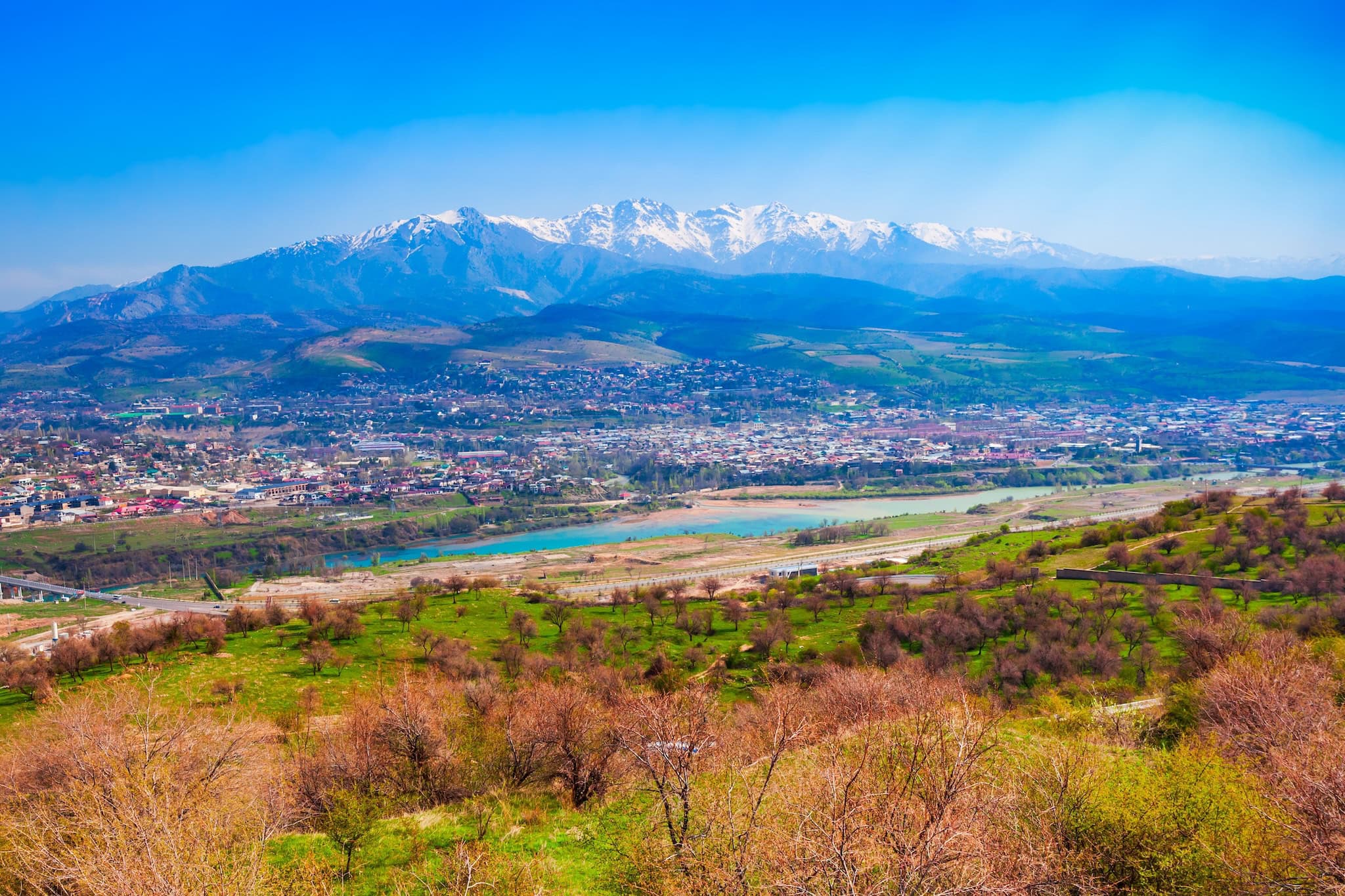
A full day out of the city into the Tian Shan foothills. Charvak is a reservoir rather than a lake: a valley flooded behind a dam a hundred and sixty-eight metres high, built after the 1966 earthquake to light the rebuilt city, and kept filled by three mountain rivers. It reads turquoise against dry hillsides when the sun is on it, with the two Chimgan peaks standing over the far end.
From there the gondola at Amirsoy runs two kilometres up the shoulder of the Chatkal range to around 2,300 metres, above the tree line and into a long view of ridge behind ridge. Late October is when the walnut and maple in the valleys have turned, and the highest ridges sometimes carry their first snow, though that is never something to count on.
After a week of tiled facades this is deliberately something else, air and distance instead of pattern and detail, and it is the easiest day of the trip for anyone travelling without a camera. We are back in Tashkent in the evening, which is free for dinner in the city with the widest choice of restaurants on the route.
Note for non-photographers: this day was put in for you as much as anyone. Bring a jacket, the mountains are cooler than the city.
Meals: Breakfast and lunch
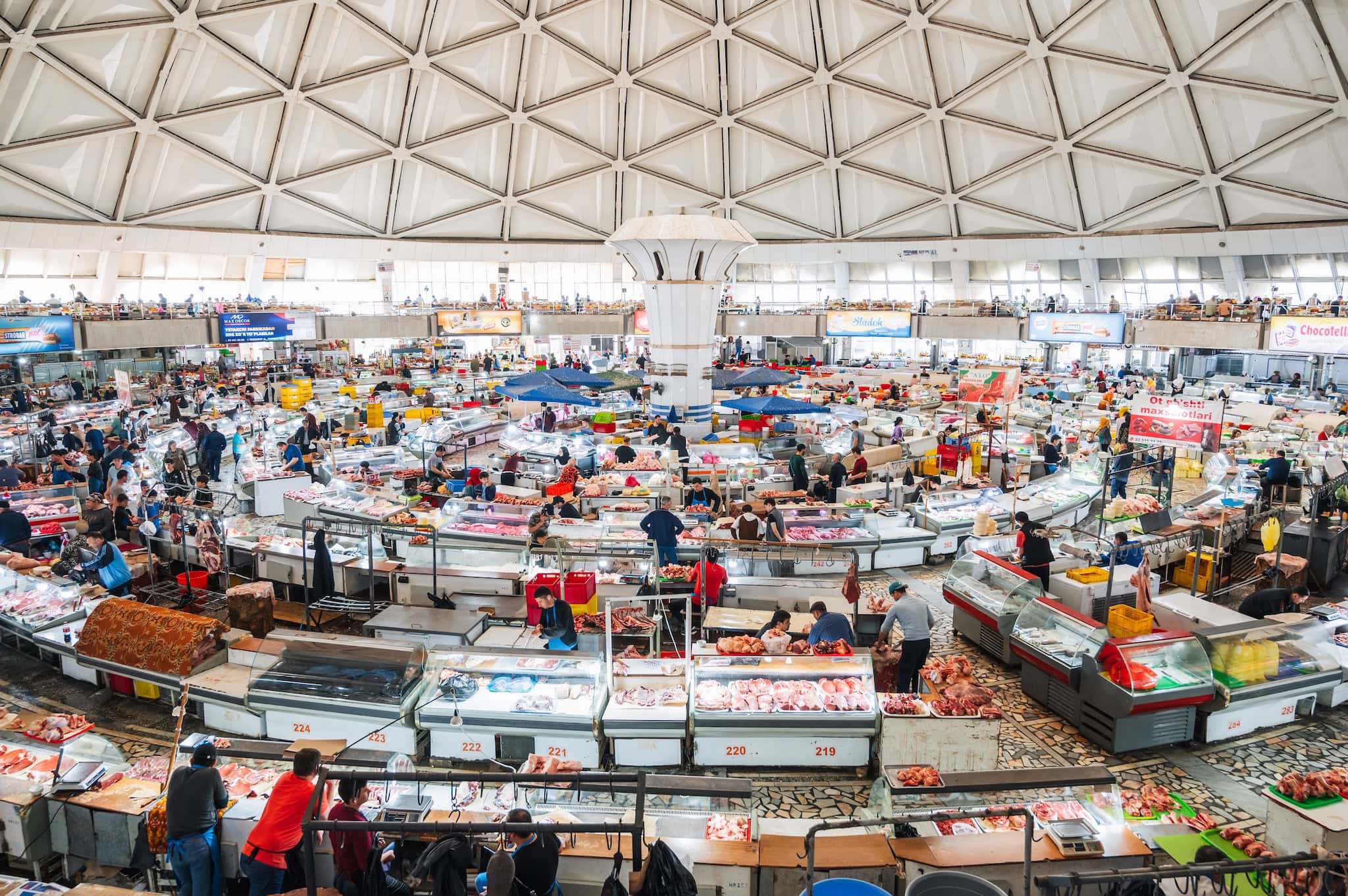
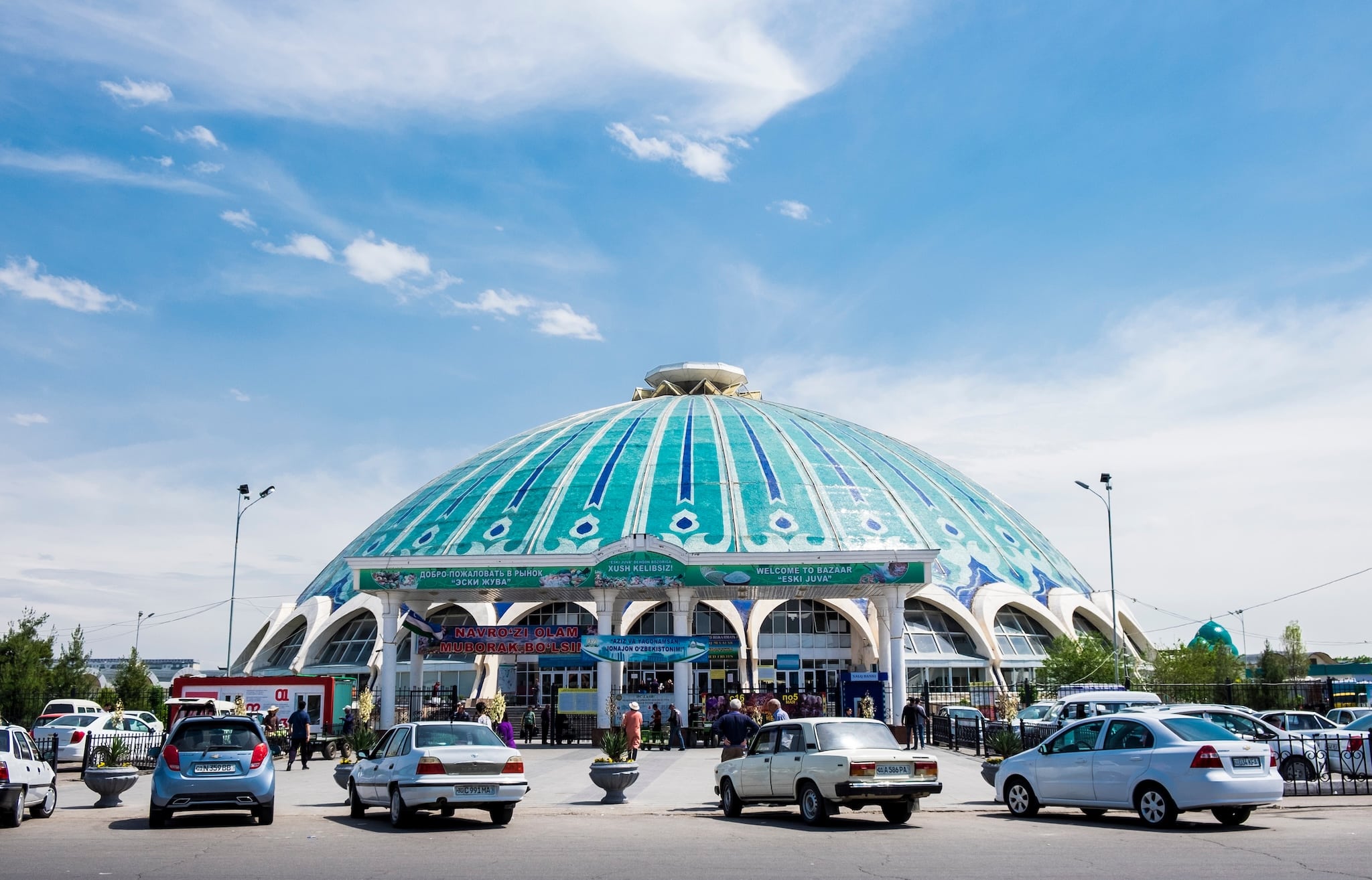
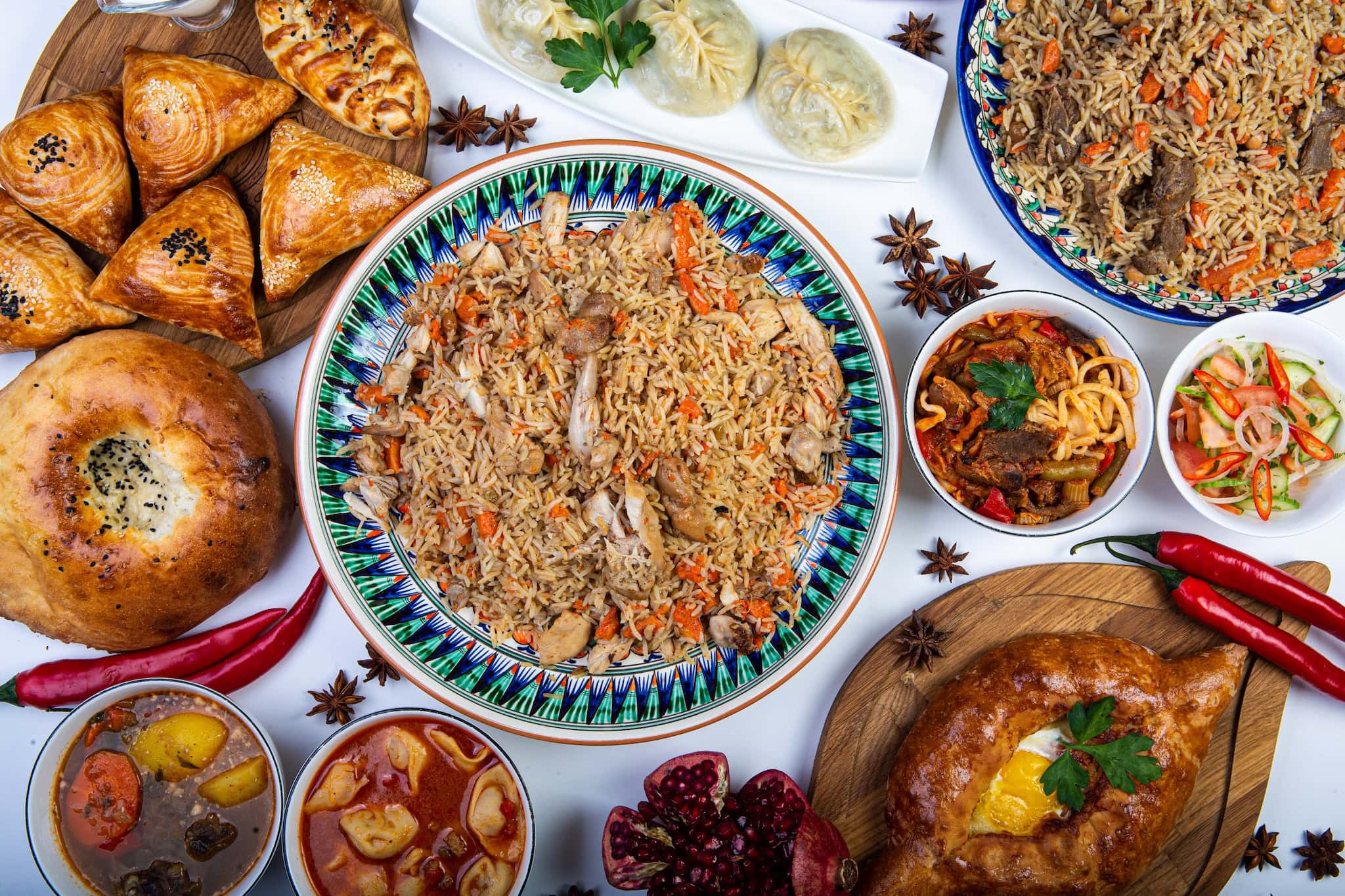
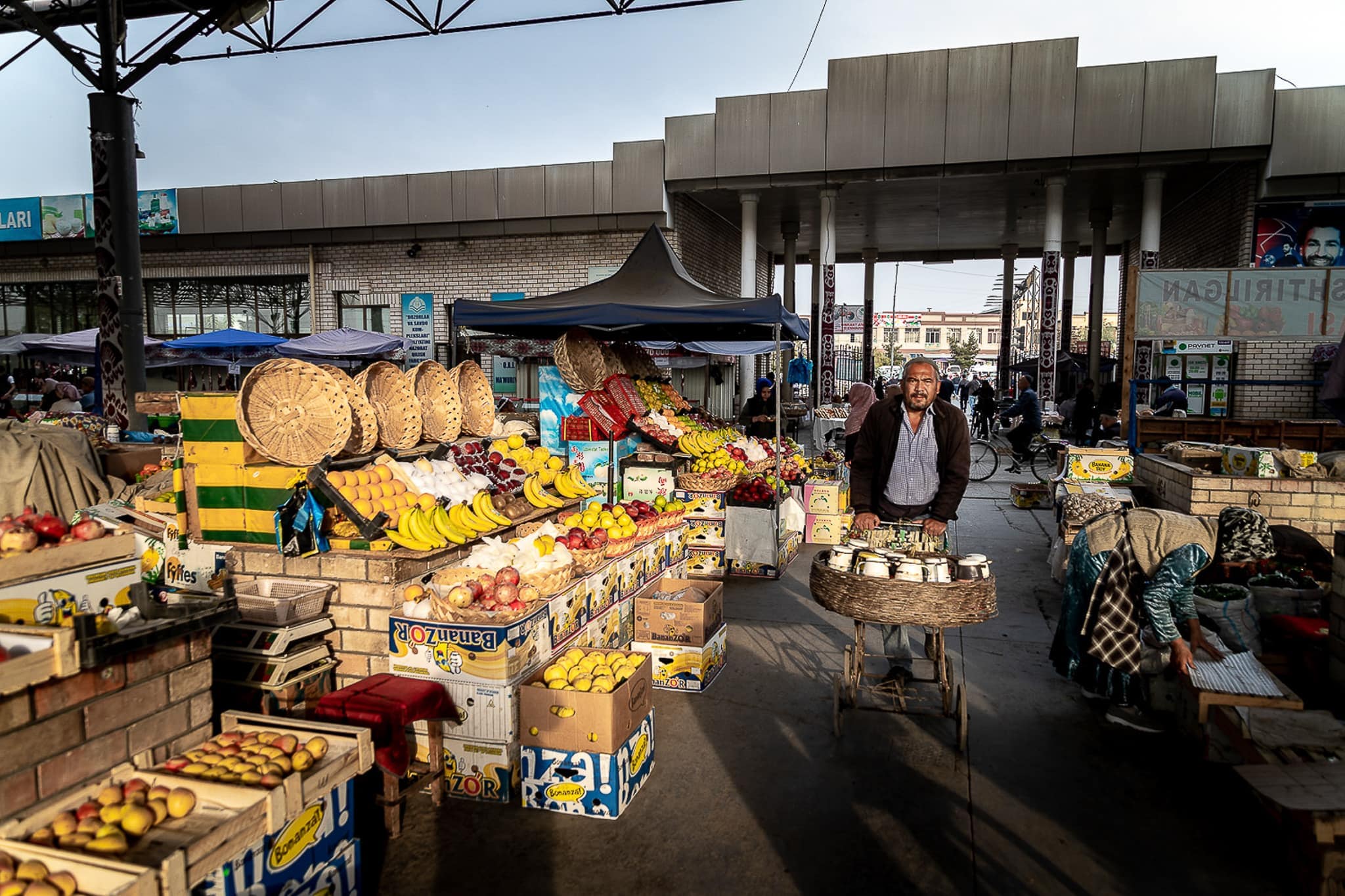
No sunrise shoot today either. After breakfast we start at Chorsu bazaar, under the great blue dome, where shafts of light come down through the roof onto the spice and bread stalls. Then lunch at the plov centre. Plov is the national dish, rice cooked slowly with lamb, carrots, onion and cumin until it takes the colour of the fat, and here it comes out of cauldrons the size of a bathtub, with the queue part of the show.
The middle of the day goes underground, which suits it: the platforms are lit the same whatever the hour, so the only variable is how many people are on them, and midday falls between the two rush hours. Photography in the Tashkent metro was allowed only from 2018 and the metro stations are extraordinary: Kosmonavtlar with its cobalt walls and portraits of cosmonauts, Alisher Navoi with its ribbed domes. We take three of them properly rather than eight in a hurry.
The last afternoon belongs to a different century: the modernist spine of the city from the Ministry of Finance to the Hotel Uzbekistan, finishing at the State Circus, a concrete flying saucer from 1976, for blue hour after sunset. Ten of Tashkent’s buildings from the 1960s to the 1980s joined the UNESCO World Heritage List in 2026, the circus among them, so the trip closes on monuments as protected as the Silk Road ones it opened with. Farewell dinner afterwards.
Note for non-photographers: the bazaar and the plov centre are the best eating of the trip, the metro costs the price of a token, and the modernist walk is flat, shaded and full of cafés.
Meals: Breakfast, lunch and farewell dinner
The tour ends with breakfast. There is no sunrise shoot and no programme today, which is deliberate: after eleven days of early starts, the last morning belongs to a slow packing and a second cup of coffee.
Depending on your flight there is time to sit in the courtyard or walk out once more before the airport transfer. Book a departure from late morning onwards and the last day stays as unhurried as the rest.
Meals: Breakfast
Please note the itinerary is subject to change. We’ll do our best to give you an enjoyable experience and the best pictures possible, even if it means adjusting the plan.
We run post-processing sessions in Adobe Lightroom Classic several times during the tour, on the slower days after breakfast, or in the evening once the shooting is done and there is material to work with.
We work on your own files on your own laptop, or on mine using frames from the same locations. Either way you see the whole path from a flat raw file to a finished one, while the place is still fresh in your head.
Groups stay at two or three people so everyone can actually see the screen, and some sessions are one to one. What you take away is how few moves a good edit actually takes, and how quickly you can get there.
Everything is done in the latest version of Lightroom Classic. Photoshop comes up only where it is genuinely needed, such as removing people from a scene by combining several frames. On request we can also talk through cataloguing and backup, or the business side of travel photography.
The tour begins in Khiva, reached via Urgench airport. Take the afternoon service from Istanbul, which lands in the early evening and puts you in bed at a sensible hour; the dates of this tour are set around it. Many guests prefer to arrive a day early, and that is easy to arrange: Turkish Airlines usually flies overnight from Istanbul and lands early in the morning, and there are several daily flights from Tashkent. Tell us and we will book the night before at the tour hotel for a supplement, so your room is ready when you land. The tour ends in Tashkent, where departures back to Istanbul run right through the day, so book one from late morning onwards and your final day stays unhurried. Individual airport transfers are included at both ends.
Comfortable, air-conditioned private minivans with professional local drivers for the transfers and day trips, one short domestic flight from Urgench to Bukhara, and two high-speed trains: the Afrosiyob from Bukhara to Samarkand, and a newer high-speed service from Samarkand to Tashkent. The flight turns a six-hour desert drive into an hour in the air, and the trains are faster and more comfortable than the road.
The domestic flight includes one checked bag of up to 23 kg per person, plus a cabin bag of up to 8 kg and a small personal item such as a camera bag. A second checked bag can be added for a small fee, paid by the guest. Pack your tripod in the checked bag, and keep batteries and power banks with you in the cabin.
Every hotel on this tour is hand-picked, and we look at three things: cleanliness, the comfort of the room you actually sleep in, and location. In the old cities the best addresses are not the international chains out by the ring road but family-run houses of ten to twenty rooms, often set around a courtyard inside the walls, a few minutes from where we photograph at sunrise.
You will not see a star count on this page. Most of the small houses inside the old walls carry no official rating at all, so stars would tell you less than the hotel photographs on this page, which show the hotels we have picked for this tour and the standard we book at.
All breakfasts are included, and so are most lunches and dinners, which we eat together as a group. Four meals are left free so you can eat where and when you like: lunch in Bukhara on day 4, lunch in Samarkand on day 7, dinner there on day 8, and dinner in Tashkent on day 10. We eat at restaurants we know and trust for good local food, which is not the same thing as fine dining.
Easy, in the sense that nothing is climbed and nothing is rushed. Expect 10,000 to 15,000 steps on active days, cobbles and uneven paving in the old towns, and stairs at a few viewpoints. The hotels are small and some have no lift, so be ready for a flight or two of stairs. We or the hotel staff will carry your luggage up. The mountain day uses a gondola, not a hike.
Open to all levels, including complete beginners, and non-photographers have a full programme of their own.
Jan is an award-winning landscape and travel photographer based in the Czech Republic. Jan regularly runs photography tours in Europe and more adventurous photo expeditions in destinations like Peru. Jan’s instruction on multi-day tours focuses on training each participant to see hidden compositions. Jan’s goal is to ensure each participant comes to understand composition and exposure, yielding more desirable results.
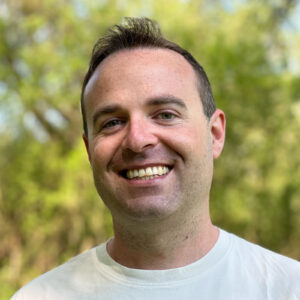
Petr is a Matkali expedition leader who has been running trips in Uzbekistan since 2021 and knows the country the way you only can after going back to it year after year. Petr is a photographer himself, working mostly in reportage, and he is drawn to the same things this tour is built around: bazaars, everyday life, people at work. He has travelled Iran, Central Asia and most of Southeast Asia, trying the trains wherever he goes, and he is learning Russian to make the region easier to work in. His own rule for travelling is the one we borrowed for this itinerary: better to see less and take it in properly than to chase every marker in the guidebook. On tour he runs the ground, the drivers, the workshops and the bookings, and he is the reason the days feel unhurried rather than crammed.

"I recently took a photographic trip to Capadoccia with Jan Miřacký with whom had the pleasure of doing a photo tour of Prague recently.
We focused mainly in Capadoccia, and secondarily in Istanbul via an extension. The experiences I had were phenomenal. I was a little concerned about the balloon ride, as I had never done one, but I flew many times in small four seater planes. The ride was so smooth and the operators so skilled that it was a total pleasure, including the flawless landing. Of course the pictures of the balloon ride were incredible, from the preparation of the balloons and the view itself from aloft.
Another unforgettable experience was the Salt Lake. I got incredible pics of the mirror-like lake, the horses and the model. The reflections are such that the horizon becomes blurred so it seems like a continuous background with the reddish hue of the sunset.
There were many more such experiences including the pottery demonstration with the smoke machine. We were dead tired towards the end, because we crammed so many things in just a few days, but the experience was incredible. I have also to mention the people that were incredible helpful at all times, from the hotel personnel to the tour guides.
Highly recommended."
"First tour with Jan Miracky, seeing the Czech Republic for the first time. Highest recommendation.
Accommodations, food, itinerary (adjusted to fit the weather) and leadership all top notch.
For a photo tour, I feel the most important thing is photo guidance and I was especially pleased with Jan's proactive helpfulness while in the field - arguably the best among a dozen photo tours I've been on."
October across the route averages about 20 to 23°C (68 to 73°F) in the afternoon and 5 to 8°C (41 to 46°F) before dawn, and the last days of October and the first of November run a few degrees below those monthly figures. The four cities are close in daytime warmth. The difference is in the mornings: the desert around Khiva is the coldest, Tashkent the mildest, and the mountains above it cooler again. The air is dry and rain is rare. Bring breathable layers, a light jacket or fleece for the evening shoots and the sunrise starts, comfortable walking shoes for cobbles, and a scarf or shawl for mosque and mausoleum visits.
Over the tour dates, sunrise runs from about 7:20am in Khiva to 6:50am in Tashkent, and sunset from about 6:05pm in Khiva to 5:20pm in Tashkent. Blue hour runs roughly 25 to 30 minutes after sunset. Uzbekistan stays on UTC+5 all year, so there is no daylight saving shift during the tour.
The tour is operated by Matkali s.r.o., identification number (ID): 23637935, which holds a Czech travel agency licence and bankruptcy protection in the form of insurance with UNIQA pojišťovna, a.s., insurance policy number 1357525304.
Yes, and the tour is built for it. We travel together through the day, and it is the mornings and the evenings that are photography-led: a companion can sleep through any sunrise, and during the evening window there is always a tea house, a bazaar or a rest instead.
Both, in the proportion most people actually want. You see the country properly and you get real instruction, without turning every stop into a classroom. If you are looking for an Uzbekistan photo workshop with formal classroom hours, this is not quite that.
Almost certainly not. US citizens have had visa-free entry for up to 30 days since January 2026, and Canadian, British and EU passports have the same 30 days, which is more than twice the length of this tour. Your hotel registers you on arrival at no charge, and the slips are worth keeping until you fly home.
Late September to early November, and April to May. We chose late October for the low sun, the dry air and the harvest colour in the countryside, and because summer light in Central Asia is flat and harsh for most of the day. Autumn also buys you the later sunrise. In late October the sun comes up between about ten to seven and twenty past; in June the same shoot would have you leaving the hotel before five.
Yes. Roughly a third of our guests on any tour are on their first photo trip, and the group is small enough that beginners get time without slowing anyone down.
Easy. Expect 10,000 to 15,000 steps on active days, uneven paving in the old cities and stairs at a few viewpoints. There is no hiking, and the mountain day uses a gondola.
A detailed list goes out before the tour. A modern phone takes lovely pictures and some people travel with nothing else. If you shoot properly, bring a mirrorless or DSLR body with a wide-angle, a mid-range zoom and a telephoto, and a fast 35mm or 50mm prime if you like working close to people. A tripod earns its place at the morning blue hours and the evening shoots.
Uzbekistan is a safe country for travellers and petty theft is rare, but we still use normal city sense.
Yes, in Khiva and Samarkand, where the history is densest, and Petr runs the ground for the whole route. We deliberately do not book a local guide for every hour of every day. Much of what makes these cities is found by turning into a side street yourself, and the programme leaves room for that.
No. Nothing on this itinerary needs a photography permit, and most monuments include photography in the entrance ticket. Where a site adds a camera fee, as the museums in Bukhara do, it is covered. One local courtesy: ask before photographing someone close up, particularly in the bazaars.
Late October gives us sunrises between about 6:50 and 7:20, so the early starts are civilised. There are five sunrise shoots across twelve days and none of them is compulsory. The one early start everyone shares is day 3, when we leave Khiva before six for the Sunday livestock market on the way to the morning flight.
October is one of the driest months on this route. Samarkand averages around 27 mm of rain across roughly five days in the whole month, Tashkent a little more, and the desert west is drier still. If a day does turn, we follow the forecast and move locations and timings to find the better light.
No. Uzbekistan does not permit drone flights by foreign visitors, and there is no tourist permit route, so please leave yours at home. Everything on this tour is planned from the ground.
Take our self-assessment quiz to find out. After answering mostly Yes/No questions that cover areas such as photography, fitness, and comfort levels, you will receive a personalized report showing whether our tours are suitable for you.
Answer 28 questions and receive a personalized report that will help you understand your strengths and areas for improvement.
The average time to complete is 15 minutes.
Enroll in our completely free 7-day mini-course delivered into your inbox daily.